UV Light Sources: Germicidal Lamps, Bulbs & Accessories

Optimize your UV curing!  Learn to select the right UV light source lamp for efficiency & precision. Arc or LED? Discover the best fit for your manufacturing needs.In the realm of modern manufacturing, precision and efficiency are paramount. For processes relying on UV curing, the UV light source lamp is the linchpin, determining the speed, quality, and consistency of the final product. Understanding the nuances of these lamps is crucial for professionals seeking to optimize their workflows.This blog explores the diverse landscape of UV light source lamps, focusing on their specific applications, selection criteria, and the impact they have on manufacturing processes.Beyond the Bulb: Understanding UV Light Source LampsA UV light source lamp is more than just a component; it's a sophisticated tool designed to emit specific wavelengths of ultraviolet radiation. These wavelengths trigger photochemical reactions in UV-curable materials, leading to rapid hardening and bonding. The choice of lamp significantly impacts the curing process, influencing factors like penetration depth, surface finish, and overall product integrity.Types of UV Light Source Lamps and Their Applications:Traditional Arc Lamps (Mercury, Metal Halide):These lamps offer a broad spectrum of UV output, making them versatile for various applications.Historically prevalent, they are still used in large-scale industrial settings where high intensity is required.Applications: Wide area coating, printing, large component adhesive curing.LED UV Lamps:Known for their energy efficiency, long lifespan, and precise wavelength control.They offer targeted UV output, minimizing heat generation and reducing energy consumption.Applications: Electronics assembly, precise adhesive bonding, 3D printing, and applications requiring minimal heat transfer.Excimer Lamps:These lamps produce narrowband UV radiation, allowing for highly specific curing processes.They are ideal for surface modification and applications requiring precise control over the curing depth.Applications: Surface treatment, fine coating applications, and advanced material processing.Key Considerations for Lamp Selection:Wavelength Specificity: The UV-curable material dictates the required wavelength. Matching the lamp's output to the material's absorption spectrum is crucial for optimal curing.Intensity and Irradiance: The power delivered to the curing surface affects the curing speed and depth. Higher intensity may be necessary for thick coatings or high-speed processes.Spectral Distribution: The range of wavelengths emitted by the lamp influences the overall curing process. A narrow spectrum provides precise control, while a broad spectrum offers versatility.Lamp Stability and Lifespan: Consistent output and a long lifespan are essential for minimizing downtime and ensuring consistent product quality. LED lamps generally excel in these areas.Cooling Requirements: UV lamps generate heat, and proper cooling is essential for maintaining optimal performance and extending lamp life.System Integration: The lamp must be compatible with the existing curing system and control mechanisms.Safety Standards: Compliance with safety regulations regarding UV radiation exposure is paramount.Optimizing Manufacturing Processes:By carefully selecting the appropriate UV light source lamp, manufacturers can:Increase production throughput by reducing curing times.Improve product quality through consistent and uniform curing.Reduce energy consumption and operating costs.Minimize environmental impact by utilizing energy-efficient LED technology.Enhance process control and precision.The Future of UV Light Source Lamps:Ongoing advancements in LED technology are driving the development of more efficient, powerful, and versatile UV lamps. Smart curing systems with integrated…

Comments Off on UV Light Sources: Germicidal Lamps, Bulbs & Accessories

UV Curing Systems: LED/UV Light Sources & High Power Options

Increase production speed, enhance quality, and reduce energy consumption with UV curing. Learn about the diverse applications and how to choose the right UV light source for your manufacturing needs.In today's fast-paced manufacturing landscape, efficiency and precision are paramount. Professionals across diverse industries are constantly seeking innovative solutions to streamline processes and enhance product quality. One technology that has revolutionized manufacturing workflows is UV curing. This powerful technique relies on UV curing light sources to rapidly cure adhesives, coatings, inks, and other materials, offering significant advantages over traditional curing methods.This blog delves into the world of UV curing light sources, exploring their applications, benefits, and key considerations for manufacturers and professionals.What is UV Curing and How Do UV Light Sources Work?UV curing is a photochemical process that uses ultraviolet (UV) light to initiate a chemical reaction, causing liquid resins or coatings to solidify or "cure" instantly. Unlike heat curing, which can take hours, UV curing occurs within seconds, leading to increased production speeds and reduced energy consumption.UV curing light sources are the heart of this process. They emit UV radiation at specific wavelengths, triggering the polymerization of photoinitiators within the UV-curable materials. Common types of UV light sources include:Arc Lamps: Traditional high-intensity lamps offering broad spectral output, suitable for various applications.LED UV Lamps: Energy-efficient and long-lasting, providing precise wavelength control and minimal heat generation.Microwave-Powered UV Lamps: High-power systems ideal for large-scale industrial applications.Key Benefits of UV Curing for Manufacturers:Increased Production Speed: Rapid curing times significantly reduce cycle times, boosting overall productivity.Enhanced Product Quality: Uniform curing ensures consistent material properties, improving product durability and aesthetics.Reduced Energy Consumption: UV LED technology offers significant energy savings compared to traditional heat curing.Improved Adhesion and Bonding: UV curing creates strong, durable bonds between various substrates.Reduced Volatile Organic Compounds (VOCs): UV-curable materials often contain lower VOCs, making them more environmentally friendly.Precise Control: LED UV lamps allow for precise control over wavelength and intensity, optimizing curing processes.Space Savings: Compact UV curing systems require less floor space than traditional curing ovens.Reduced Waste: Instant curing reduces the risk of material defects and rework.Applications Across Industries:UV curing light sources find applications in a wide range of industries, including:Electronics: Bonding components, conformal coating, and PCB assembly.Automotive: Adhesive bonding, paint curing, and interior component manufacturing.Medical Devices: Manufacturing medical adhesives, coatings, and implants.Printing and Packaging: Curing inks and coatings on labels, packaging, and printed materials.Woodworking and Furniture: Curing coatings and adhesives for furniture and flooring.Aerospace: Bonding and coating aircraft components.3D Printing: Curing resin-based 3D printed parts.Choosing the Right UV Curing Light Source:Selecting the appropriate UV curing light source depends on several factors, including:Material to be cured: The specific UV-curable material dictates the required wavelength and intensity.Application requirements: The size and shape of the substrate, as well as the desired curing speed and uniformity.Production volume: High-volume production may require high-power systems.Budget and energy efficiency: LED UV lamps offer long-term cost savings through reduced energy consumption and maintenance.Spectral Output: The range of UV wavelengths produced by the light source.Intensity and Irradiance: The power delivered to…


Comments Off on UV Curing Systems: LED/UV Light Sources & High Power Options

UV Bonding & Welding Glue Kit

Achieve Crystal-Clear Bonds: The Power of a UV Glass Bonding Kit In today's world, where aesthetics and precision are paramount, glass bonding has become an essential technique for various applications. From delicate repairs to intricate crafting, a UV glass bonding kit offers a powerful and efficient solution. This blog explores the benefits, applications, and essential components of a UV glass bonding kit, empowering you to create flawless glass bonds. Beyond Traditional Adhesives: The Advantages of UV Curing Traditional glass adhesives often require lengthy curing times, leaving room for imperfections and potential bond failures. UV glass bonding kits utilize UV-curable adhesives that solidify rapidly under UV light, offering significant advantages: Rapid Curing: Instant curing under UV light allows for immediate handling and faster project completion. High Bond Strength: UV-cured adhesives create strong, durable, and long-lasting bonds. Optical Clarity: Many UV adhesives are optically clear, ensuring seamless and invisible bonds. Precise Application: The ability to control the curing process allows for precise adhesive placement and minimal waste. Minimal Shrinkage: UV adhesives typically exhibit low shrinkage, resulting in a smooth and even bond line. Applications Across Diverse Projects: UV glass bonding kits are versatile tools suitable for a wide range of applications: Glass Repair: Fixing cracked or chipped glass items, such as vases, glassware, and decorative objects. Glass Crafting: Creating intricate glass art, jewelry, and stained glass projects. DIY Projects: Bonding glass components in home improvement projects and custom creations. Electronics Repair: Bonding glass components in electronic devices, such as touchscreens and displays. Aquarium Repair: Sealing and repairing glass aquariums and terrariums. Optical Bonding: Bonding optical components such as lenses. Essential Components of a UV Glass Bonding Kit: A typical UV glass bonding kit includes: UV-Curable Adhesive: A specialized adhesive that cures rapidly under UV light. UV Light Source: A handheld UV lamp or LED light for curing the adhesive. Precision Applicator: A syringe or needle-tip applicator for precise adhesive placement. Cleaning Supplies: Isopropyl alcohol or other cleaning solutions for preparing the glass surfaces. Safety Glasses: Protective eyewear to shield your eyes from UV light. Instructions: Detailed instructions for proper use and safety precautions. Key Considerations for Optimal Results: Surface Preparation: Thoroughly clean and dry the glass surfaces before applying the adhesive. Adhesive Selection: Choose an adhesive that is compatible with the specific glass materials and application requirements. UV Light Exposure: Ensure adequate UV light exposure for proper curing. Safety Precautions: Always wear safety glasses and follow the manufacturer's instructions. Ventilation: Work in a well-ventilated area to avoid inhaling any fumes. Achieve Flawless Glass Bonds with Ease: A UV glass bonding kit empowers you to create strong, clear, and durable glass bonds with ease. By understanding the benefits, applications, and essential components, you can unlock the potential of UV curing technology and achieve professional-quality results in your glass bonding projects. Contact Us, Incure's authorized distributor for personalized recommendations. Visit www.blazeasia.com to learn more.https://youtu.be/B_k9twRy09o

Comments Off on UV Bonding & Welding Glue Kit

UV Curing Conveyors

UV curing conveyors: continuous, automated curing for printing, electronics, & more. Explore benefits, key features, and how to choose the right system.In manufacturing environments demanding rapid and consistent curing, UV curing conveyors stand as a pivotal solution. These systems integrate the precision of UV curing technology with the efficiency of a conveyor belt, leading to increased throughput and superior product quality. This blog delves into the benefits, applications, and crucial considerations when selecting a UV curing conveyor for your operations.Revolutionizing Curing Processes: From Batch to ContinuousTraditional batch curing methods can be time-consuming and inconsistent. UV curing conveyors offer a continuous, automated approach, eliminating bottlenecks and ensuring uniform curing across every product. This transition from batch to continuous processing brings about significant advantages:Increased Throughput: Continuous processing dramatically accelerates production speeds.Consistent Curing: Uniform UV exposure ensures consistent curing quality, minimizing defects.Reduced Handling: Automated conveyance minimizes manual handling, reducing the risk of damage and contamination.Space Optimization: Integrated systems save valuable floor space compared to multiple batch curing setups.Energy Efficiency: Optimized UV systems and continuous operation reduce energy consumption.Diverse Applications Across Industries:UV curing conveyors find application in a wide array of sectors:Printing and Packaging: Curing inks, coatings, and adhesives on labels, packaging materials, and printed electronics.Electronics Manufacturing: Curing conformal coatings, adhesives, and solder masks on PCBs and electronic components.Medical Device Manufacturing: Curing adhesives and coatings on medical devices and components.Automotive Industry: Curing coatings and adhesives on automotive parts and components.Woodworking and Furniture: Curing UV-curable finishes on wood surfaces.Plastics Industry: Curing coatings and adhesives on plastic parts.Key Considerations When Selecting a UV Curing Conveyor:UV Source and Wavelength: Choose a UV source (LED or arc lamp) and wavelength that matches the curing requirements of your materials.Conveyor Speed and Width: Determine the conveyor speed and width needed to accommodate your production volume and product size.UV Intensity and Uniformity: Ensure the system provides sufficient UV intensity and uniform distribution across the curing area.Cooling System: Select a system with an effective cooling system to prevent overheating of sensitive materials.Control System: Evaluate the system's control capabilities, including speed control, intensity adjustment, and monitoring.Safety Features: Ensure the system incorporates appropriate safety features, such as UV shielding and interlocks.Integration and Automation: Consider the system's compatibility with your existing production line and automation requirements.Maintenance and Support: Choose a supplier that offers reliable maintenance and support services.NEWGENTM C9000 UV Conveyor ConfigurationIncure C9000 withL3018Incure C9000 withL1044Incure C9000 withF100x1ABIncure C9000 withF200x1ABIncure C9000 withF400x1ACIncure C9000 withF500x1ACType of LampLED BeamARC FloodARC FocusedIntensity @2.5" DistanceUVA(UVV) mW/cm22,500 (3,000)1,800 (87)154 (141)223(215)312 (287)436 (390)Intensity AdjustmentYesYesNoYesNoNoCuring Energy (belt speed)@ 1.5 feet/min (min)@ 6.0 feet/min (nominal)@ 12.0 feet/min (max)UVA (UVV) mJ/cm28,400 (10,000)2,100 (2,500)1,050 (1,250)UVA (UVV) mJ/cm224,000 (1,100)6,000 (300)3,000 (145)UVA (UVV) mJ/cm24,200 (4,000)1,050 (1,000)525 (500)UVA (UVV) mJ/cm28,900 (8,600)2,200 (2,100)1,100 (1,050)UVA (UVV) mJ/cm210,400 (9,500)2,600 (2,300)1,300 (1,190)UVA (UVV) mJ/cm25,900 (5,500)1,490 (1,400)740 (690)Optional Wavelengths365, 395, 405365, 395, 405320, 365320, 365254, 365254, 365Recommended Working Distance1.5" -3"0.2" - 3"1.5" - 3"1.5" - 3"1.5" - 3"1.5" - 3"Expected Bulb Life>20,000 hrs>20,000 hrs>1,000 hrs>1,000 hrs>1,000 hrs>1,000 hrsIntensity Decay over Life20%20%45%45%45%45%Maximum Part Cure Width Exposure Width8"1"4"4"8"6"8"6"5"5"5"3"Stand-Alone ConfigurationYesYesYesYesYesYesDynamic Uniformity0.9 @ 3.0" distance0.9 @ 3.0" distance0.78…

Comments Off on UV Curing Conveyors

Glass Bonding Systems | UV Adhesives & Curing for Strong, Clear Bonds

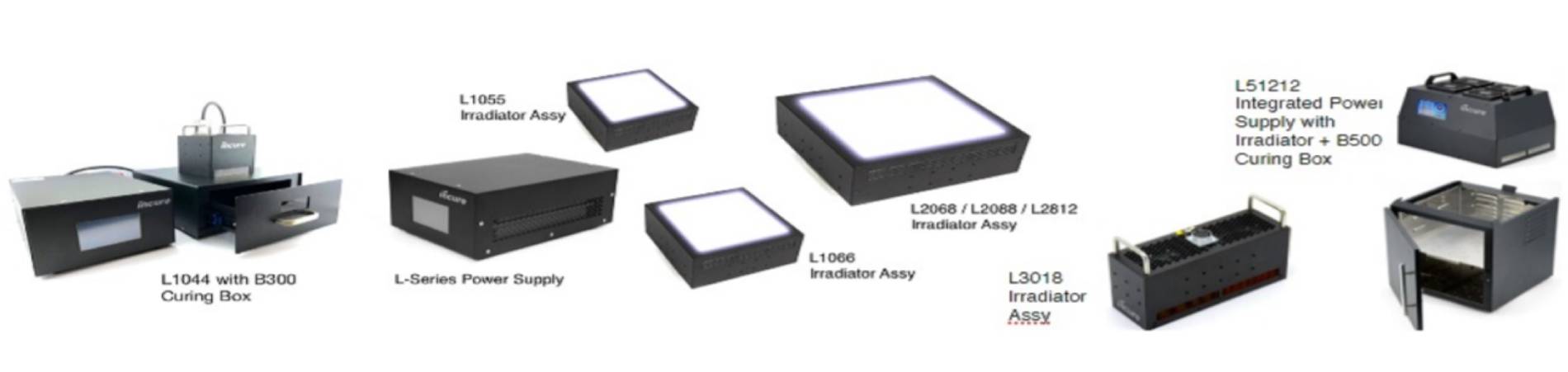
Discover modern glass bonding systems for electronics, architecture, and more. Achieve seamless bonds with high strength and environmental resistance.In today's world, glass is more than just a transparent barrier. From sleek smartphone screens to complex architectural structures, glass plays a crucial role in countless applications. But how do we securely and seamlessly join glass components? The answer lies in advanced glass bonding systems. This blog explores the benefits, applications, and key considerations when selecting the right system for your needs.Beyond Traditional Methods: The Evolution of Glass BondingTraditional methods like mechanical fasteners or simple adhesives often fall short when it comes to glass bonding. They can create stress points, visible seams, or lack the necessary durability. Modern glass bonding systems offer a superior approach, leveraging advanced technologies to create strong, invisible, and long-lasting bonds.Key Benefits of Advanced Glass Bonding Systems:High Bond Strength: Engineered adhesives and curing processes create exceptionally strong bonds, capable of withstanding significant stress.Optical Clarity: Many systems utilize optically clear adhesives, ensuring seamless and invisible bonds.Design Flexibility: Glass bonding allows for complex and innovative designs that would be impossible with traditional methods.Durability and Longevity: Advanced adhesives are resistant to environmental factors like UV radiation, moisture, and temperature fluctuations.Reduced Stress: Uniform stress distribution minimizes the risk of glass breakage.Aesthetic Appeal: Seamless bonds enhance the visual appeal of glass products.     ConfigurationL1044 L1055 L1066L2068 L2088 L2812L3018L51212 Type of LampLED Flood, ProgrammableIntensity  in  mW/cm2 (Measured with  EIT Power  Puck   Distance  from  Lamp Base) UVAUVV  UVA UVV    UVA UVV    UVA UVV   UVA UVV UVA  UVV UVA UVV  UVA UVV  @0.5  275013922001121930911650701380591240 568750 138070 @1.0  254012720401051780  87 153069127058115055 8000 127064@1.5"2420120 1940991700  84 146068121057109054 7500 121060@2.0"2370116 1900931660  81 143067119056107053 7200 119058@2.5" 2260 111 1810871590 78 136066113055102052 6900  113056@3.0" 2070 101 166082145075125065  1040 54 940 51 6750  1040 51 @4.0" 1550 82 1240771090 72 93064 780  53 700 50 6600   780  41  Intensity Adjustment    LED Controller     Available Wavelengths365 , 395, 405  Working Distance   1.5” - 4.0”   Expected Bulb Life*  > 20,000 hrs  Intensity Decay over Life       20%  Static Uniformity @ 2.0”    0.78  Dynamic Uniformity @ 3.0”    0.90  Curing Area 4” x 4” 5” X 5” 6” X 6” 6” X 8”  8” X 8”  8” X 12”1” X 8” 12” X 12” Curing Box Adjustable Heights   (optional   purchase)    3.5” Max Distance   Temperature ManagementForced Air with Standby Mode Power Input 100-240V, 50/60Hz, Auto-Ranging External Control Port      LCD Programmable Panel Ordering Part Number  L1044-365  L1044-395 L1044-405  L1055-365   L1055-395  L1055-405L1066-365 L1066-395 L1066-405L2068-365 L2068-395 L2068-405  L2088-365   L2088-395   L2088-405 L2812-365  L2812-395  L2812-405L3018-365 L3018-395 L3018-405 L21212-365 L21212-395 L21212-405 Irradiator Dimension / Weight  5.1” x 5.1” x 6.4” (4.6 lb)    6.1” x 6.1” x 6.4” (5.9 lb)   7.1” x 7.1” x 6.4” (5.9 lb)   7.6” x 9.1” x 6.4” (9.2 lb)     9.9” x 9.9” x 3.95” (15.5 lb)   9.1” x 18.1” x 6.4” (18.4 lb)    10.3” x 3.6” x 4.0” (5.5 lb) 14.7” x 14.2” x 21.6” (78 lb)     Controller Dimension / Weight12.9” x 5.2” x 9” (17.1 lb) 13” x 9.1” x 5.2” (14.5 lb)    Curing Drawer / Box(Optional                 Purchase,Unless Specified)B300Request For More Information Included       Curing Drawer / Box Dimension  12” x 12” x 5.5”12” x 12” x 5.5”12” x 12” x 5.5”12” x 12” x 5.5”12” x 12” x 5.5” Interlock Safety FeatureIntegrated When Mounted on B300 Curing Drawer C9000 TM Conveyor MountingYesNoNot Applicable   Applications Across Diverse Industries:Glass bonding systems are used in a wide range of industries:Electronics: Bonding touchscreens, display panels, and other components in smartphones, tablets, and other devices.Architecture: Creating structural glass walls, facades, and skylights.Automotive: Bonding windshields, rear windows, and other glass components.Medical Devices: Bonding glass components…

Comments Off on Glass Bonding Systems | UV Adhesives & Curing for Strong, Clear Bonds

Ultra-High Power UV LED Curing Systems | Fast, Efficient & Cool Cure

Switch to high-power UV LED curing for rapid, precise, and eco-friendly results. Learn key selection factors for your manufacturing needs In modern manufacturing, efficiency and speed are paramount. Traditional UV curing methods can be slow, energy-intensive, and environmentally unfriendly. Enter high-power UV curing LED systems: a revolutionary technology that delivers rapid, precise, and sustainable curing for a wide range of applications. This blog delves into the benefits, applications, and key considerations when choosing a high-power UV curing LED system. The Evolution of UV Curing: From Bulbs to LEDs Traditional UV curing relied on mercury arc lamps, which generate significant heat, consume high energy, and contain hazardous materials. High-power UV curing LED systems offer a superior alternative, leveraging the advantages of LED technology: Energy Efficiency: LEDs consume significantly less energy than traditional lamps, reducing operating costs and environmental impact. Long Lifespan: LEDs have a much longer lifespan, minimizing downtime and maintenance costs. Precise Control: LEDs offer precise control over intensity and wavelength, enabling optimized curing for specific materials. Instant On/Off: LEDs turn on and off instantly, eliminating warm-up and cool-down times. Cool Operation: LEDs generate less heat, reducing the risk of damage to heat-sensitive materials. Environmentally Friendly: LEDs are mercury-free, eliminating the risk of hazardous waste. High-Power Advantage: Speed and Performance High-power UV curing LED systems take these benefits to the next level, delivering: Faster Curing Speeds: Higher intensity LEDs enable rapid curing, increasing production throughput. Deeper Curing: High power allows for deeper penetration of UV light, ensuring complete curing of thick coatings and adhesives. Uniform Curing: Advanced optics and LED arrays ensure uniform light distribution, resulting in consistent curing across the entire surface. Increased Productivity: Faster curing and reduced downtime translate to increased productivity and profitability. Applications Across Diverse Industries: High-power UV curing LED systems find applications in a wide range of industries: Adhesive Bonding: Rapid curing of adhesives in electronics, automotive, and medical device manufacturing. Coating Curing: High-speed curing of coatings on wood, plastics, and metal surfaces. Printing and Graphics: Instant curing of inks and coatings in digital printing and graphic arts. Electronics Manufacturing: Curing of conformal coatings, solder masks, and other materials in PCB assembly. Medical Device Manufacturing: Curing of medical adhesives and coatings in a controlled environment. Key Considerations When Choosing a High-Power UV Curing LED System: Wavelength: Select the appropriate wavelength for your specific curing application. Intensity: Determine the required intensity to achieve the desired curing speed and depth. Curing Area: Choose a system with a curing area that matches your production requirements. Control System: Evaluate the system's control capabilities, including intensity control, timing, and monitoring. Cooling System: Ensure the system has an effective cooling system to maintain optimal LED performance. Integration: Consider the system's compatibility with your existing production line. Reliability and Support: Choose a reputable supplier that offers reliable products and comprehensive support. The Future of Curing: Embracing LED Technology High-power UV curing LED systems represent the future of curing technology. By offering superior performance, energy efficiency, and environmental friendliness, these systems are transforming…

Comments Off on Ultra-High Power UV LED Curing Systems | Fast, Efficient & Cool Cure

Precision Fluid Dispensing Systems | Automated & Manual Fluid Control

Discover how fluid dispensing machines ensure precision in manufacturing. Explore applications, benefits, and crucial factors for choosing the right system. In today's fast-paced manufacturing landscape, precision and efficiency are paramount. Whether you're assembling intricate electronics, applying adhesives in medical devices, or sealing components in automotive production, accurate fluid dispensing is crucial. That's where a fluid dispensing machine becomes an indispensable asset. This blog explores the benefits, applications, and key considerations when choosing a fluid dispensing machine. The Power of Precision: Understanding Fluid Dispensing Fluid dispensing machines are designed to apply precise amounts of liquids, adhesives, sealants, and other fluids with unparalleled accuracy and consistency. Unlike manual application, which can lead to inconsistencies and waste, automated dispensing ensures: Consistent Dosing: Precise control over the amount of fluid dispensed, minimizing variations and ensuring uniform application. Accurate Placement: Precise positioning of the dispensing nozzle, allowing for accurate application in even the most intricate designs. Reduced Waste: Optimized fluid usage, minimizing waste and reducing material costs. Increased Throughput: Automated dispensing significantly speeds up production, increasing efficiency and reducing cycle times. Improved Quality: Consistent and accurate dispensing leads to higher product quality and reduced defects. Applications Across Industries: Fluid dispensing machines are used in a wide range of industries, including: Electronics Manufacturing: Applying solder paste, adhesives, and conformal coatings to PCBs and electronic components. Medical Device Manufacturing: Dispensing adhesives for bonding medical devices, applying coatings to implants, and filling syringes. Automotive Manufacturing: Applying adhesives for bonding components, sealing gaskets, and applying lubricants. Aerospace Manufacturing: Dispensing adhesives and sealants for bonding and sealing aircraft components. General Manufacturing: Applying adhesives, sealants, lubricants, and other fluids in various assembly and manufacturing processes. Key Considerations When Choosing a Fluid Dispensing Machine: Fluid Type and Viscosity: Consider the type and viscosity of the fluid you'll be dispensing. Dispensing Accuracy and Repeatability: Evaluate the machine's accuracy and repeatability to ensure it meets your requirements. Dispensing Speed and Throughput: Determine the required dispensing speed and throughput to meet your production needs. Automation Level: Choose a machine with the appropriate level of automation for your application. Software and Control System: Evaluate the machine's software and control system for ease of use and functionality. Maintenance and Support: Consider the availability of maintenance and support services. Budget: Determine your budget and choose a machine that offers the best value for your investment. Dispensing Method: common dispensing methods include time/pressure, jetting, and screw valve. Investing in Efficiency and Quality: A fluid dispensing machine is a valuable investment for any manufacturing operation that requires precise and consistent fluid application. By automating the dispensing process, you can improve product quality, increase efficiency, and reduce costs. In conclusion: Fluid dispensing machines are an essential tool for modern manufacturing. They provide the precision, consistency, and efficiency needed to meet the demands of today's competitive market. By carefully considering your specific needs and choosing the right machine, you can unlock significant benefits and achieve new levels of productivity.

Comments Off on Precision Fluid Dispensing Systems | Automated & Manual Fluid Control

High Temperature Vacuum Grease

High-temperature vacuum grease: essential for extreme conditions. Learn benefits, applications, and how to choose the right lubricant. Extend lifespan & ensure reliability. In demanding industrial and scientific applications, where high temperatures and vacuum environments collide, ordinary lubricants simply won't cut it. That's where high-temperature vacuum grease steps in, providing crucial protection and performance where others fail. This blog explores the vital role of these specialized lubricants, their benefits, and how to choose the right one for your needs. Understanding the Challenge: High Temperature and Vacuum Imagine a scenario where components are subjected to intense heat while operating in a vacuum. This combination creates a unique set of challenges: Degradation: Ordinary greases break down rapidly under high temperatures, losing their lubricating properties and potentially leaving behind harmful residues. Outgassing: In a vacuum, volatile components of lubricants can evaporate, contaminating the environment and affecting sensitive processes. Oxidation: High temperatures accelerate oxidation, leading to the formation of sludge and deposits that can hinder performance. High-Temperature Vacuum Grease: The Solution High-temperature vacuum grease is specifically formulated to withstand these extreme conditions. These lubricants are designed with: Thermally Stable Base Oils: Often silicone or perfluoropolyether (PFPE) based, these oils resist degradation at elevated temperatures. Low Volatility: Formulated to minimize outgassing, ensuring a clean vacuum environment. Inert Additives: Additives are carefully selected to enhance performance without compromising stability or cleanliness. Key Benefits of Using High-Temperature Vacuum Grease: Extended Component Lifespan: By providing reliable lubrication, these greases minimize wear and tear, extending the lifespan of critical components. Improved Performance: Consistent lubrication ensures smooth operation and optimal performance, even under extreme conditions. Reduced Maintenance: The long-lasting nature of high-temperature vacuum grease minimizes the need for frequent relubrication. Clean Vacuum Environment: Low outgassing properties prevent contamination, ensuring the integrity of vacuum processes. Reliability: In critical applications, these greases provide the reliability needed to ensure continuous operation. Applications Where High-Temperature Vacuum Grease Excels: Vacuum Furnaces: Lubricating bearings and seals in high-temperature vacuum furnaces. Sputtering and Evaporation Systems: Protecting components in thin-film deposition processes. Semiconductor Manufacturing: Ensuring reliable operation of equipment in cleanroom environments. Aerospace Applications: Lubricating components in space vehicles and satellites. High-Temperature Ovens and Kilns: Protecting bearings and other moving parts in industrial ovens. Scientific Instruments: Lubricating sensitive equipment in research and development settings. Choosing the Right High-Temperature Vacuum Grease: Selecting the appropriate grease is crucial for optimal performance. Consider these factors: Temperature Range: Ensure the grease can withstand the operating temperatures of your application. Vacuum Level: Choose a grease with low outgassing properties suitable for your vacuum requirements. Chemical Compatibility: Verify the grease is compatible with the materials it will contact. Viscosity: Select a viscosity that provides adequate lubrication for your specific application. Application-Specific Requirements: Consider any unique requirements, such as food-grade or cleanroom compatibility.

Comments Off on High Temperature Vacuum Grease

What is vacuum grease vs silicone grease?

Vacuum Grease vs. Silicone Grease: Understanding the Key Differences When it comes to lubrication in specialized applications, two common contenders are vacuum grease and silicone grease. While they might seem similar at first glance, their properties and intended uses differ significantly. Understanding these distinctions is crucial for optimal performance and longevity of your equipment. What is Grease, Anyway? Before diving into the specifics, let's establish a basic understanding of grease. Grease is a semi-solid lubricant consisting of a base oil, a thickener, and additives. The base oil provides the lubrication, the thickener holds the oil in place, and the additives enhance specific properties. Silicone Grease: Versatility for Everyday Applications Silicone grease is a lubricant based on silicone oil. It's known for its: Wide Temperature Range: Silicone grease typically performs well in both high and low temperatures, making it versatile for various environments. Water Resistance: It repels water and is often used in applications where moisture is a concern. Compatibility with Plastics and Rubber: Silicone grease is generally safe for use with many plastics and rubber materials, preventing degradation. Electrical Insulation: It often possesses excellent dielectric properties, making it suitable for electrical applications. Common Applications of Silicone Grease: Plumbing (lubricating O-rings and seals) Automotive (weather stripping, brake components) Electrical connections General lubrication of moving parts Vacuum Grease: Specialized for High Vacuum Environments Vacuum grease is designed specifically for use in high vacuum environments. Its key characteristics include: Low Volatility: This is the most critical feature. Vacuum grease has a very low vapor pressure, meaning it doesn't readily evaporate in a vacuum. This prevents contamination of the vacuum system and maintains a stable vacuum. Chemical Inertness: It's often formulated to be chemically inert, minimizing reactions with other materials in the vacuum system. High Purity: Vacuum grease is manufactured to high purity standards to minimize outgassing and contamination. Common Applications of Vacuum Grease: Vacuum pumps Vacuum chambers Laboratory equipment (glass joints, stopcocks) Semiconductor manufacturing Scientific instruments Key Differences Summarized: Feature Silicone Grease Vacuum Grease Base Oil Silicone Oil Specialized oils with low volatility Volatility Moderate Very low Temperature Range Wide Varies, focused on low volatility. Water Resistance Excellent Good, but primarily focused on vacuum compatibility Primary Use General lubrication, water resistance, compatibility with plastics High vacuum environments Purity Standard to High Very High When to Use Which? Choose silicone grease when you need a versatile lubricant that can handle a wide range of temperatures, water exposure, and contact with various materials. Choose vacuum grease when you need a lubricant that can maintain a stable vacuum by minimizing outgassing and contamination. Important Considerations: Always check the manufacturer's specifications for the specific grease you're using. Ensure compatibility with the materials in your application. Properly cleaning surfaces before applying grease is crucial for optimal performance. By understanding the distinct properties of vacuum grease and silicone grease, you can select the right lubricant for your specific application, ensuring optimal performance and longevity of your equipment.

Comments Off on What is vacuum grease vs silicone grease?

What is High Vacuum Grease? | Low-Volatile Sealant & Lubricant Explained

What is High Vacuum Grease? High vacuum grease is a specialized lubricant designed for use in high vacuum environments. It is formulated to have extremely low vapor pressure, meaning it does not easily evaporate or outgas under high vacuum conditions. This is crucial because any outgassing can contaminate the vacuum environment and interfere with sensitive processes. Key Characteristics of High Vacuum Grease Low Vapor Pressure: This is the most critical characteristic, ensuring minimal contamination of the vacuum environment. Chemical Inertness: High vacuum grease should not react with the materials it comes into contact with, such as metals, ceramics, or elastomers. Thermal Stability: It should maintain its lubricating properties over a wide temperature range, from cryogenic temperatures to high temperatures. Radiation Resistance: In some applications, high vacuum grease may be exposed to radiation, so it should be able to withstand such exposure without degradation. Applications of High Vacuum Grease High vacuum grease is used in a variety of applications where maintaining a high vacuum is essential, including: Scientific Research: In scientific research, high vacuum grease is used in various instruments, such as mass spectrometers, electron microscopes, and particle accelerators. Industrial Processes: It is also used in industrial processes like vacuum coating, semiconductor manufacturing, and aerospace engineering. Vacuum Systems: High vacuum grease is used to lubricate valves, seals, and other components in vacuum systems to ensure smooth operation and prevent leaks. Types of High Vacuum Grease There are several types of high vacuum grease available, each with specific properties and applications. Some common types include: Silicone Greases: These are the most common type of high vacuum grease, known for their low vapor pressure and good thermal stability. Fluorocarbon Greases: These greases offer even lower vapor pressure than silicone greases and are often used in ultra-high vacuum applications. Hydrocarbon Greases: These greases are less commonly used in high vacuum applications due to their higher vapor pressure, but they may be suitable for certain applications. Choosing the Right High Vacuum Grease Selecting the appropriate high vacuum grease depends on the specific application and the required vacuum level. Factors to consider include: Vapor Pressure: The lower the vapor pressure, the better for high vacuum applications. Temperature Range: The grease should be able to withstand the temperature extremes of the application. Chemical Compatibility: The grease should not react with the materials it comes into contact with. Radiation Resistance: If the application involves radiation, the grease should be able to withstand it. By carefully selecting and using high vacuum grease, it is possible to maintain a high vacuum environment and ensure the proper functioning of various scientific and industrial equipment.

Comments Off on What is High Vacuum Grease? | Low-Volatile Sealant & Lubricant Explained