
EIT SpotCure® UV Intensity Meter: Precise Measurement for Spot Curing

The EIT SpotCure® is the industry standard for measuring UV output in spot curing systems. Portable, easy-to-use, and essential for optimizing your UV curing process.  Monitors system performance, lamp output, and light guide degradation.  Accurate and Portable UV Measurement for Optimized Spot Curing The EIT SpotCure® UV Intensity Meter is the industry standard for quantifying UV output in spot curing systems. This portable and easy-to-use device is essential for establishing, validating, and verifying small area and spot curing processes. It's also an invaluable tool for evaluating different UV curing equipment. Key Benefits for Production Environments: Monitor UV Spot Curing System Performance: Track and maintain the consistency of your UV curing processes. Measure Individual UV Lamp Performance: Assess the output of individual UV lamps to identify potential issues. Evaluate Light Guide Degradation: Detect light guide degradation and contamination that can affect curing efficiency. Optimize Light Guide Positioning: Ensure precise light guide placement for optimal curing results. Meet Quality Requirements: Provide documented evidence of consistent UV output to meet quality control standards. EIT SpotCure® UV Intensity Meter: Key Features Compact and User-Friendly: Small and lightweight design for easy handling and operation. Portable and Self-Contained: No cords or cables to manage, making it ideal for use throughout the production floor. Long Battery Life: High-capacity battery provides >100,000 readings, minimizing downtime. Versatile Light Guide Compatibility: Includes three adapters to accommodate multiple light guide sizes. Instant Feedback: Provides immediate readings on spot curing system performance. Two Range Options: Available in Standard Range (up to 20W/cm²) and Extended Range (up to 100W/cm²) to suit your specific intensity requirements. EIT SpotCure® UV Intensity Meter: Specifications Compact Size: 4.60” long x 1.74” diameter. Ergonomic Design: Flashlight-like shape for comfortable one-handed operation. Measurement Head: Contains the optics and accepts various light guide adapters. Optimize Your UV Spot Curing Process The EIT SpotCure® UV Intensity Meter provides operators with instant feedback on the performance of their spot curing systems. Its compact, ergonomic design and ease of use make it an indispensable tool for any manufacturing environment utilizing UV curing. Download SpotCure Brochure Contact us today to learn more about UV intensity meters and how we can help you achieve your project goals. Visit www.blazeasia.com to learn more or request a quote.

Comments Off on EIT SpotCure® UV Intensity Meter: Precise Measurement for Spot Curing

What is UV-C Light Used For? A Powerful Tool for Disinfection and Purification

UV-C light effectively eliminates bacteria, viruses, and other pathogens. Used in water treatment, air purification, surface disinfection, and more, UV-C technology plays a crucial role in creating safer environments. Learn about its applications and safety considerations.Understanding UV-C Light: UV-C light falls within the ultraviolet spectrum, specifically between 200 and 280 nanometers. It's the shortest wavelength and most energetic form of UV radiation. This high energy level allows UV-C light to disrupt the DNA and RNA of microorganisms, effectively killing or inactivating them. It's important to note that UV-C radiation from the sun is completely absorbed by the Earth's atmosphere and does not reach the surface. Key Applications of UV-C Light: UV-C light's germicidal properties make it a valuable tool for disinfection and purification in various settings: Water Treatment: UV-C is used to disinfect drinking water, wastewater, and pool water, effectively eliminating bacteria, viruses, and other pathogens without the use of chemicals. Air Purification: UV-C lamps are incorporated into HVAC systems and standalone air purifiers to kill airborne microorganisms, improving indoor air quality and reducing the spread of airborne illnesses. Surface Disinfection: UV-C light is used to sanitize surfaces in hospitals, laboratories, clean rooms, and other environments where microbial contamination is a concern. Robotic UV-C disinfection systems are increasingly used for large-scale surface disinfection. Medical Sterilization: UV-C is used to sterilize medical equipment and instruments, ensuring they are free from harmful microorganisms. Food Processing: UV-C can be used to disinfect food surfaces and packaging, extending shelf life and enhancing food safety. HVAC Systems: UV-C light can be installed in HVAC ducts to prevent mold growth on coils and improve system efficiency, in addition to disinfecting the air. Research and Laboratory Use: UV-C is a valuable tool in research laboratories for sterilizing equipment, disinfecting surfaces, and treating samples. How UV-C Light Works: UV-C light's effectiveness stems from its ability to damage the genetic material (DNA and RNA) of microorganisms. This damage prevents the microorganisms from replicating, effectively killing or inactivating them. The specific wavelength of 254 nanometers is particularly effective for this purpose. Is UV-C Light Safe? While UV-C light is a powerful disinfectant, it's also important to use it safely. Direct or prolonged exposure to UV-C light can be harmful to the skin and eyes. Therefore, UV-C devices are designed with safety features to prevent exposure during operation. It's crucial to follow manufacturer instructions and safety guidelines when using UV-C equipment. Never look directly at a UV-C lamp. Choosing the Right UV-C System: The appropriate UV-C system will depend on the specific application. Factors to consider include: Type of microorganism: Different microorganisms have varying levels of susceptibility to UV-C light. Intensity and exposure time: The required UV-C dose depends on the target microorganism and the specific application. Size and scale: Consider the size of the space or the volume of water or air to be treated. Safety features: Ensure the chosen system has appropriate safety mechanisms to prevent UV-C exposure. Maintenance requirements: Consider the maintenance needs of the UV-C system, such…

Comments Off on What is UV-C Light Used For? A Powerful Tool for Disinfection and Purification

UV vs. UV-C: Key Differences in Ultraviolet Light for Disinfection

UV light is categorized into UV-A, UV-B, and UV-C. While UV (including UV-A and UV-B) is associated with sunburns, UV-C is a powerful germicidal form of UV radiation used for disinfection and sterilization. Learn about the key differences and safety considerations. Understanding the UV Spectrum: The UV spectrum is further divided into three main categories based on wavelength: UV-A (315-400 nm): This is the longest wavelength UV light and makes up the majority of the UV radiation that reaches the Earth's surface. UV-A is relatively harmless but can contribute to skin aging and some types of skin cancer over long periods of exposure. UV-B (280-315 nm): UV-B radiation is more energetic than UV-A and is responsible for sunburns. It also plays a role in vitamin D production in the skin, but excessive exposure can significantly increase the risk of skin cancer and other skin damage. Much of the sun's UV-B radiation is absorbed by the ozone layer. UV-C (200-280 nm): This is the shortest wavelength and most energetic form of UV radiation. UV-C is germicidal, meaning it can kill or inactivate microorganisms like bacteria, viruses, and mold. Fortunately, UV-C radiation from the sun is completely absorbed by the Earth's atmosphere and doesn't reach the surface. The Key Difference: Wavelength and Energy: The primary difference between UV and UV-C lies in their wavelength and energy levels. UV is a general term encompassing all three types (UV-A, UV-B, and UV-C). UV-C is a specific, shorter wavelength type of UV radiation. Because of its shorter wavelength, UV-C carries more energy than UV-A or UV-B. This higher energy level is what makes UV-C effective at disrupting the DNA and RNA of microorganisms, leading to their inactivation or death. UV-C: The Germicidal Powerhouse: UV-C's germicidal properties make it incredibly useful for disinfection and sterilization applications. You'll find UV-C light used in: Water treatment: Disinfecting drinking water and wastewater. Air purification: Killing airborne pathogens in HVAC systems and standalone air purifiers. Surface disinfection: Sanitizing surfaces in hospitals, laboratories, and other environments. Medical sterilization: Sterilizing medical equipment and instruments. Is All UV Light Dangerous? While UV-B and excessive exposure to UV-A can be harmful, UV-C's danger comes from its high energy. Because it's so effective at damaging DNA, it can also damage human skin and eyes with prolonged or direct exposure. However, because it doesn't penetrate deeply into the skin, the primary risk is to the surface of the skin and the eyes. This is why UV-C sanitizing devices are designed with safety measures to prevent exposure during operation. It's crucial to use UV-C devices responsibly and according to manufacturer instructions. In Summary: UV is a broad term that includes UV-A, UV-B, and UV-C. UV-C is a specific, high-energy type of UV radiation with germicidal properties. UV-C is used for disinfection and sterilization, while UV-A and UV-B have other applications and potential health risks. Safe use of UV-C devices is essential to prevent harm to skin and eyes. Understanding the difference between UV and UV-C is vital…

Comments Off on UV vs. UV-C: Key Differences in Ultraviolet Light for Disinfection

UV Radiometer Explained: Your Guide to Accurate UV Measurement

UV radiometers measure the intensity and dose of ultraviolet (UV) radiation, crucial for applications from disinfection and sterilization to UV curing and safety monitoring. Learn about different types and how to choose the right one for your needs.Ultraviolet (UV) radiation is a powerful tool used in various applications, from disinfecting water and sterilizing medical equipment to curing inks and treating certain skin conditions. But how do we know how much UV energy is being emitted? That's where a UV radiometer comes in. This blog post will explain what a UV radiometer does, why it's important, and the different types available. What is a UV Radiometer? A UV radiometer is an instrument used to measure the intensity or dose of ultraviolet (UV) radiation. Think of it as a light meter specifically designed for UV light. It tells you how much UV energy is present in a given area or being emitted by a UV source. Key Terms Explained: UV Intensity (Irradiance): This measures the amount of UV power falling on a surface per unit area. It's typically measured in Watts per square centimeter (W/cm²) or milliwatts per square centimeter (mW/cm²). Think of it as the "brightness" of the UV light. UV Dose (Radiant Exposure): This measures the total amount of UV energy received by a surface over a specific period. It's calculated by multiplying the UV intensity by the exposure time. It's typically measured in Joules per square centimeter (J/cm²) or millijoules per square centimeter (mJ/cm²). Think of it as the total "amount" of UV light the surface received. What a UV Radiometer Measures: A UV radiometer can measure either UV intensity or UV dose, depending on the type of radiometer and how it's used. Some radiometers can even measure both. Why is UV Measurement Important? Accurate UV measurement is crucial for several reasons: Ensuring Effective Disinfection/Sterilization: In applications like water treatment or medical sterilization, knowing the UV dose ensures that the process is effective in killing harmful microorganisms. Too little UV light might not be sufficient, while too much could be wasteful or even damaging. Controlling UV Curing Processes: In manufacturing, UV curing is used to harden inks, coatings, and adhesives. Precise UV dose control is essential for achieving the desired product quality and consistency. Protecting People and Materials: Overexposure to UV radiation can be harmful. UV radiometers are used to monitor UV levels in workplaces and ensure that safety limits are not exceeded. They are also used to assess the UV degradation of materials. Optimizing UV System Performance: Regular UV measurements can help track the performance of UV lamps and systems, indicating when they need maintenance or replacement. Research and Development: UV radiometers are essential tools for researchers studying the effects of UV radiation on various materials and organisms. Types of UV Radiometers: UV radiometers come in various forms, each designed for specific applications: Broadband UV Radiometers: These measure UV radiation across a broad range of wavelengths. Narrowband UV Radiometers: These are designed to measure UV radiation within a…

Comments Off on UV Radiometer Explained: Your Guide to Accurate UV Measurement

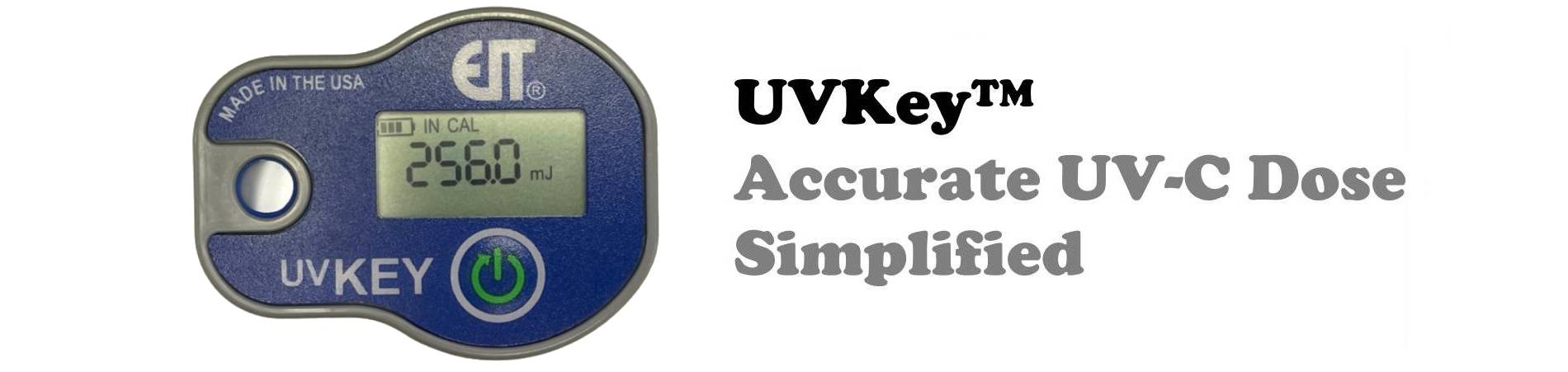
UVKey™ Germicidal Radiometer: Accurate UVC Dose Measurement for Disinfection

The UVKey™ is a compact, easy-to-use UV-C radiometer optimized for 254nm germicidal UV measurement.  Provides accurate, NIST-traceable dose readings for hospitals, medical offices, research, and more.  Eliminates the guesswork of film-based methods. IP67 sealed. In today's world, effective disinfection is more critical than ever. For manufacturers and professionals working with UV-C technology, precise and reliable measurement of UV energy (dose) is essential for ensuring optimal performance and safety. That's where the UVKey™ UV-C radiometer comes in. This blog post will explore why the UVKey™ is an indispensable tool for anyone working with 254nm germicidal UV-C light. The Challenge of Accurate UV-C Measurement: Ensuring proper UV-C dosage is crucial for effective disinfection. Traditional methods, like radiochromic films, can be subjective, prone to color interpretation errors, and exhibit lot-to-lot variations. This inconsistency can lead to inaccurate readings and potentially compromise disinfection effectiveness. Introducing the UVKey™: Precision at Your Fingertips: The UVKey™ is a cutting-edge UV-C radiometer specifically designed for 254nm germicidal UV measurement. It's optimized for applications demanding high control of UV energy (dose), making it an ideal solution for a wide range of industries and professionals. Why Manufacturers and Professionals Need the UVKey™: Consistent and Reliable Results: The UVKey™ provides accurate, NIST-traceable numerical displays of UV-C dose, eliminating the guesswork and inconsistencies associated with traditional methods. This ensures consistent and repeatable disinfection results every time. Simplified Operation: With single-button operation, the UVKey™ is incredibly easy to use, even for personnel with minimal technical training. This streamlined approach saves time and reduces the risk of errors. Compact and Versatile: The small size of the UVKey™ allows for easy attachment in various settings and minimizes shadowing, ensuring accurate measurements even in tight spaces. Cost-Effective Solution: The UVKey™ offers an affordable opto-electronic solution that provides excellent matching and repeatability, instrument-to-instrument, source to source, and run-to-run. This minimizes the need for multiple devices and reduces overall costs. Durable and Reliable: The UVKey™ is IP67 sealed, protecting it from dust and fluid splashes, making it suitable for use in demanding environments. Flexible Options: Subscription plans are available to meet your specific needs and budget. Target Applications: The UVKey™ is ideal for a variety of applications, including: HVAC Systems: Verifying the effectiveness of UV-C air disinfection systems. Water Treatment: Monitoring UV-C dosage for water disinfection. Benefits for Your Business: Enhanced Disinfection Efficacy: Ensure consistent and accurate UV-C dosage for optimal disinfection. Improved Safety: Minimize the risk of under- or over-exposure to UV-C light. Reduced Costs: Eliminate the need for costly and inconsistent alternative methods. Streamlined Processes: Simple operation and compact size make the UVKey™ easy to integrate into existing workflows. Increased Confidence: NIST-traceable readings provide assurance of accurate measurements. Download UVKey™ Brochure Download UVKey™ Manual https://youtu.be/atYUktesDtA

Comments Off on UVKey™ Germicidal Radiometer: Accurate UVC Dose Measurement for Disinfection

UV Air Duct Disinfection: HVAC Systems for Cleaner, Healthier Air

Combat airborne pathogens with UV air duct disinfection. Effective against bacteria, viruses, and mold, these systems improve indoor air quality and create healthier environments. Learn about residential and commercial models and how they can benefit you.Indoor air quality is paramount for health and well-being, whether in a residential or commercial setting. UV air duct disinfection systems offer a powerful solution for combating airborne pathogens and creating healthier environments. This blog post will explore the benefits of UV air duct disinfection and highlight models suitable for both homes and businesses.Why UV Air Duct Disinfection is Essential:Harmful microorganisms like bacteria, viruses, mold spores, and fungi can circulate through your HVAC system, contaminating the air you breathe. UV-C light, a specific wavelength of ultraviolet light, is a proven germicidal agent that can neutralize these pathogens. Integrating a UV air duct disinfection system into your HVAC system offers several key benefits:Improved Indoor Air Quality: Reduces the concentration of airborne pathogens, creating a healthier environment for occupants.Reduced Illness: By targeting harmful microorganisms, UV-C disinfection can contribute to a decrease in the spread of airborne illnesses.Healthier HVAC Systems: UV-C light can help prevent mold growth on HVAC components, improving system efficiency and longevity.Odor Control: Can help reduce some odors caused by mold and bacteria.How UV Air Duct Disinfection Works:UV-C lamps are installed within your HVAC ductwork, typically near the cooling coil or in the return air duct. As air flows through the ducts, it passes over the UV-C lamps, and the powerful UV-C light damages the DNA and RNA of microorganisms, effectively killing or inactivating them.UV Air Duct Disinfection Models: Residential vs. Commercial:While the basic principle is the same, UV air duct disinfection systems are available in models designed for different applications:Residential Models:Smaller Scale: Residential UV air duct systems are typically smaller and designed to integrate with home HVAC systems.Easy Installation: Many residential models are designed for relatively easy installation, though professional installation is often recommended.Affordable Options: Residential models are generally more budget-friendly than commercial-grade systems.Focus on Home Health: These systems primarily focus on improving indoor air quality for families and reducing the spread of common household illnesses.Commercial Models:Higher Capacity: Commercial UV air duct systems are designed for larger spaces and higher airflow rates.Durable Construction: Commercial models are built to withstand the demands of continuous operation in commercial settings.Advanced Features: May include features like multiple lamps, airflow sensors, and remote monitoring capabilities.Professional Installation: Professional installation is essential for commercial UV air duct disinfection systems to ensure proper sizing and safe operation.Focus on Business Health: These systems aim to protect employees, customers, and visitors, reducing sick leave and promoting a healthy work environment.Choosing the Right UV Air Duct Disinfection System:Several factors should be considered when selecting a UV air duct disinfection system:HVAC System Size and Airflow: The system must be appropriately sized for your HVAC system's capacity.Number of Occupants: Consider the number of people in the space, as this impacts the level of potential contamination.Specific Concerns: Are you primarily concerned about bacteria, viruses, or mold? Different UV-C…

Comments Off on UV Air Duct Disinfection: HVAC Systems for Cleaner, Healthier Air

UV-C Duct Systems: Remove Mold, Bacteria & Viruses from HVAC Air

Control airborne pathogens like bacteria, mold, and viruses with the AeroLogic® UV-C air duct disinfection system. Seamlessly integrates with new or existing HVAC systems.The AeroLogic® One Lamp Air Duct Disinfection System integrates seamlessly with your HVAC system to reduce or eliminate the growth of bacteria, mold, and spores. AeroLogic® systems help control the spread of airborne viruses, including cold and flu, and other airborne transmitted diseases, contributing to a healthier indoor environment.Sizing Your AeroLogic® UV-C System:To properly size your UV-C air duct disinfection system, we require the following information:Duct or plenum sizeLength of the compartment or duct where fixtures will be installedAir speed (typically provided in CFM - cubic feet per minute)Approximate air temperatureOur UV Application Specialists will use this information to calculate the necessary contact time and lamp output to recommend the ideal AeroLogic® model for your specific HVAC system. Contact us today for a personalized consultation.AeroLogic® UV-C Air Duct Disinfection System: Key Features and BenefitsEasy Installation: Fixtures can be mounted in new or existing air duct systems.Lightweight and Durable: Constructed of lightweight anodized aluminum alloy for long-lasting performance.Powerful UV-C Disinfection: Utilizes STER-L-RAY® Germicidal Ultraviolet (UV-C) Lamps to effectively reduce or eliminate bacteria, mold, and spores, controlling the spread of airborne viruses and diseases.Visual Lamp Inspection: Observation Port/Sight Glass Assembly allows for easy visual inspection of the lamp operation.Continuous Disinfection: Provides continuous protection without requiring special attention.Efficient Operation: Equipped with a lightweight, high-efficiency electronic ballast.Low Maintenance: Designed for minimal maintenance.Benefits of UV-C Air Duct Disinfection:Improved Indoor Air QualityReduced Airborne PathogensHealthier HVAC SystemsPotential to Reduce Sick Building Syndrome Download AeroLogic® Brochure Contact us today for a consultation or visit www.blazeasia.com to learn more.

Comments Off on UV-C Duct Systems: Remove Mold, Bacteria & Viruses from HVAC Air

UV Water Purifiers: Superior Quality for Home, Business & More

The MIGHTY PURE® series offers superior quality and a range of standard features, making it a versatile solution for various water purification needs. From home water wells and laboratories to farms, boats, restaurants, and more, MIGHTY PURE® purifiers deliver reliable ultraviolet (UV) disinfection. Optional accessories, including an Ultraviolet Monitor, provide in-depth insight into purifier operation.MIGHTY PURE® UV Water Purifier: Key Features & BenefitsHigh Flow Rates: Available in models ranging from 3 to 20 gallons per minute (180 to 1200 gallons per hour), catering to diverse water demands.Durable Construction: 316 stainless steel chamber, electropolished and passivated for superior corrosion resistance and long-lasting performance.Easy Lamp Replacement: Exclusive EASY-OFF™ End Cap simplifies lamp changes, minimizing downtime and maintenance.Convenient Draining: Drain plug allows for easy in-place draining of the purifier chamber.Visual Lamp Operation: Sight port provides a clear view of the germicidal ultraviolet lamp operation, ensuring proper function.Global Compatibility: Available for operation on public power supplies worldwide.Flexible Installation: Optional stainless steel mounting brackets provide versatile installation options.High-Quality Components: Includes STER-L-RAY® UV Lamp and CRYSTAL CLEAR™ Quartz Sleeve for optimal performance and longevity.Industry-Leading Warranty: Backed by the best warranty in the industry for your peace of mind.MIGHTY PURE® UV Water Purifier Monitoring Options:Enhance your water purification system with our range of monitoring options:Guardian™ Ultraviolet Monitors: Provides real-time monitoring of UV-C intensity for optimal disinfection.STERALERT™ Lamp Status Alarm: Alerts you to any issues with the UV lamp, ensuring continuous protection.SENTRY™ Safety Sensor: Adds an extra layer of safety by detecting potential UV leaks.Explore the MIGHTY PURE® UV Water Purifier LineView our Water Purifier Comparison Chart to explore all available models and find the perfect MIGHTY PURE® system for your specific needs. [Link to Water Purifier Comparison Chart]Applications:Home Water WellsLaboratoriesFarms & RanchesBoats & RVsCampgroundsRestaurantsAnd many more!Learn More:Contact us today for a free consultation and to discuss your water purification requirements. Download MIGHTY PURE® Brochure

Comments Off on UV Water Purifiers: Superior Quality for Home, Business & More

Do UV Air Purifiers Produce Ozone? Understanding the Risks and Choosing Safe Options

UV air purifiers are a popular choice for improving indoor air quality, but a common concern is whether they produce ozone. Ozone is a gas that can irritate the lungs and worsen respiratory conditions. This blog post will address the question of ozone production in UV air purifiers, explain the risks, and provide guidance on choosing safe options.How UV-C Air Purifiers Work (Recap):UV-C air purifiers use ultraviolet-C (UV-C) light to neutralize airborne pathogens like bacteria, viruses, and mold. The UV-C light damages the DNA and RNA of these microorganisms, effectively killing or inactivating them.Ozone and UV-C Light: The ConnectionSome UV-C lamps, particularly those that emit wavelengths below 200 nanometers, can produce ozone as a byproduct. When UV-C light interacts with oxygen in the air, it can break apart oxygen molecules (O2), which then recombine to form ozone (O3).Is All UV-C Light Ozone-Producing?No. Not all UV-C lamps produce ozone. The amount of ozone produced depends on several factors, including:Wavelength of UV-C Light: UV-C lamps that emit wavelengths closer to 185 nanometers are more likely to produce ozone than those emitting wavelengths closer to 254 nanometers (which is more common in modern air purifiers).Lamp Design and Materials: The design and materials used in the UV-C lamp can also affect ozone production.Operating Conditions: Factors like humidity and temperature can also play a role.Risks of Ozone Exposure:Ozone is a lung irritant. Even low levels of ozone can cause:Coughing and sore throatChest painShortness of breathWorsening of asthma symptomsIncreased susceptibility to respiratory infectionsChoosing a Safe UV Air Purifier:It's crucial to select a UV air purifier that is safe and does not produce harmful levels of ozone. Here's what to look for:Ozone-Free or Low-Ozone Claims: Look for products that are explicitly advertised as ozone-free or that produce very low, safe levels of ozone.Certifications: Check for certifications from reputable organizations that verify low ozone emissions. For instance, look for products that meet UL 2998, the standard for ozone emissions from air cleaning devices.Read Reviews: See what other users have to say about the product and whether they have experienced any ozone-related issues.Manufacturer Information: Check the manufacturer's specifications and documentation for information about ozone emissions. Contact the manufacturer directly if you have any concerns.Avoid 185nm UV Lamps: As a general rule, UV-C lamps that operate at or close to 185nm are more likely to produce ozone and should be avoided. Most modern UV air purifiers use 254nm which produces little to no ozone.What to Do if You Smell Ozone:If you notice a distinct, pungent, almost metallic smell coming from your UV air purifier, it could indicate ozone production. If you suspect ozone, unplug the unit immediately and contact the manufacturer or a qualified technician.Combining Technologies for Safer Air Purification:For comprehensive air purification, consider using a combination of technologies:HEPA Filter: To remove dust, pollen, pet dander, and other particulate matter.Activated Carbon Filter: To remove gases, odors, and VOCs.UV-C Light (Optional, and only a safe, ozone-free unit): To help neutralize some microorganisms.Conclusion:While some older or poorly designed UV air purifiers can…

Comments Off on Do UV Air Purifiers Produce Ozone? Understanding the Risks and Choosing Safe Options

UV Air Purifier Side Effects: Understanding Safety & Potential Risks

UV air purifiers are gaining popularity as a method for improving indoor air quality. They utilize ultraviolet-C (UV-C) light to neutralize airborne pathogens. While they offer potential benefits, it's crucial to understand the potential side effects and risks associated with their use. This blog post will delve into the possible drawbacks of UV air purifiers, helping you make an informed decision about whether they're right for you.How UV Air Purifiers Work:UV-C air purifiers work by shining UV-C light on air as it passes through the unit. This short-wavelength light damages the DNA and RNA of microorganisms like bacteria, viruses, and mold, effectively neutralizing them.Potential Side Effects and Risks:While UV-C light can be effective at killing germs, it's crucial to be aware of the following potential side effects and risks:UV-C Exposure: UV-C light is harmful to the skin and eyes. Direct or prolonged exposure can cause burns, skin irritation, and even cataracts. A properly designed UV air purifier should contain the UV-C light source within the unit to prevent any leakage. Never look directly at a UV-C lamp.Ozone Production: Some UV-C lamps can produce ozone, a gas that is a known lung irritant. Even low levels of ozone can trigger asthma attacks, cause chest pain, and irritate the respiratory system. It's crucial to choose a UV air purifier that is either ozone-free or produces very low, safe levels of ozone. Look for certifications that guarantee low ozone emissions.Lack of Effectiveness Against All Pollutants: UV air purifiers primarily target biological pollutants like bacteria and viruses. They are not effective at removing other common indoor air pollutants such as dust, pollen, pet dander, volatile organic compounds (VOCs), or radon. For these pollutants, a HEPA filter and/or activated carbon filter are necessary. Relying solely on a UV air purifier may give a false sense of security.Maintenance and Replacement Costs: UV-C lamps have a limited lifespan and need to be replaced periodically, typically every 6-12 months. This adds to the ongoing cost of owning a UV air purifier. Failing to replace the bulb can significantly reduce the unit's effectiveness.Ineffective Airflow: If the UV air purifier isn't designed with proper airflow, the air may not be exposed to the UV-C light for a sufficient time to effectively neutralize pathogens. This can render the unit largely ineffective."False Sense of Security": One of the biggest risks is that a UV air purifier can give a false sense of security. Users might assume their air is completely clean and disregard other important air quality measures like regular cleaning, ventilation, and addressing the source of pollutants.Limited Real-World Effectiveness: While lab tests can show impressive results, the real-world effectiveness of UV air purifiers can be significantly lower. Dust, dirt, and other particles in the air can shield microorganisms from the UV-C light, reducing its efficacy.Mitigating the Risks:Choose a reputable brand: Look for products from well-known manufacturers with a proven track record of safety and effectiveness.Check for certifications: Look for certifications that ensure the unit meets safety standards and has been tested…

Comments Off on UV Air Purifier Side Effects: Understanding Safety & Potential Risks