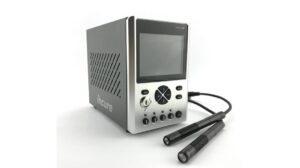
Frustrated With Fading or Uneven Coatings? Map Your LEDs
In the world of industrial manufacturing, precision is the difference between a high-quality product and a costly batch of scrap. For those utilizing UV LED curing technology, the promise of efficiency, longevity, and reduced heat transfer is often what drives the transition from traditional mercury vapor lamps. However, many production managers and quality control engineers eventually face a perplexing challenge: fading, tacky surfaces, or uneven coatings that seem to appear out of nowhere. If you are frustrated with inconsistent results, the answer likely lies in the invisible output of your UV source. It is time to map your LEDs.
The Hidden Challenges of UV LED Curing
UV LED technology has revolutionized the printing, coating, and adhesive industries. Unlike traditional lamps that require long warm-up times and emit a broad spectrum of light (including significant infrared heat), LEDs are instant-on and emit a narrow, targeted wavelength. This specificity is their greatest strength, but it also creates a unique set of vulnerabilities.
When a coating fails to cure evenly, the immediate reaction is often to blame the chemistry of the ink or the substrate’s surface tension. While these are valid variables, the most common culprit is a “non-uniform” UV field. Because an LED array is composed of hundreds or thousands of individual diodes, the failure or degradation of even a small cluster can create “dead zones” or “cool spots” in the curing window. These spots are often invisible to the naked eye but catastrophic for the integrity of the coating.
Why Visual Inspection Isn’t Enough
One of the most dangerous myths in UV curing is that “if the light is blue, it is working.” Human eyes cannot see ultraviolet light; we only see the visible violet “tail” of the emission spectrum. An LED array might appear bright and functional, yet its actual UV output—measured in mW/cm²—could be 40% below the required threshold for polymerization. Without a data-driven approach to monitoring these outputs, you are essentially flying blind.
Understanding the Science: Irradiance vs. Energy Density
To solve the problem of uneven coatings, we must first understand the two primary metrics of UV curing: Irradiance and Energy Density (often called “dose”).
- Irradiance (Intensity): Measured in mW/cm², this is the “brightness” of the UV light at a specific point in time. High irradiance is critical for overcoming oxygen inhibition at the surface of the coating.
- Energy Density (Dose): Measured in mJ/cm², this is the total amount of UV energy delivered over a specific period. It is the product of irradiance and time (speed of the conveyor or exposure duration).
Uneven coatings often occur because the peak irradiance varies across the width of the lamp. If the center of your conveyor is receiving 4000 mW/cm² but the edges are only receiving 2800 mW/cm², the edges of your product may suffer from poor adhesion or “fading” because the chemical reaction was never fully initiated. Mapping your LEDs allows you to see this distribution in a three-dimensional profile.
The Anatomy of an LED Array Failure
Why do LED arrays lose their uniformity? Unlike mercury lamps, which tend to fail globally, LED systems degrade incrementally. Understanding these failure points is the first step toward effective mapping.
Individual Diode Degradation
Every diode in an array has a lifespan. However, they do not all age at the same rate. Factors such as manufacturing variances or localized heat can cause specific diodes to dim faster than their neighbors. This creates a “Swiss cheese” effect in the UV output, where tiny pockets of the coating receive insufficient energy.
Thermal Management and Its Impact on Output
LEDs are highly sensitive to heat. If the cooling system (water-cooled or air-cooled) is obstructed or inefficient, the junction temperature of the diodes rises. As temperature increases, the efficiency of the LED drops, leading to a decrease in UV output. If one side of a lamp has a clogged cooling fin, that side will output less UV than the other, directly resulting in uneven curing across the substrate.
Contamination and Optical Obstruction
In industrial environments, outgassing from inks, dust, or overspray can settle on the quartz window of the LED head. Even a thin film of contamination can block 10% to 20% of the UV energy. Because contamination is rarely perfectly uniform, it creates “shadows” in the curing zone that shift over time.
What is LED Mapping and Why Does Your Process Need It?
LED mapping is the process of using a specialized radiometer to measure the UV output across the entire curing area, both in terms of width (lateral) and length (longitudinal). Instead of taking a single measurement in the center of the belt, mapping involves a systematic “grid” approach to ensure the entire curing window meets the specification.
By mapping your LEDs, you transition from “guessing” to “knowing.” You can identify exactly which part of the lamp is underperforming and take corrective action before a customer rejects a shipment. It provides a “fingerprint” of your machine’s performance that can be compared over weeks, months, and years.
Step-by-Step Guide to Mapping Your UV LED System
Implementing a mapping protocol does not have to be overly complex. Here is how a professional industrial setup typically handles it:
1. Establish a Baseline
When your LED system is brand new, or after you have just replaced an array, take comprehensive measurements. Record the peak irradiance (mW/cm²) and total energy density (mJ/cm²) at multiple points across the width of the conveyor. This is your “Gold Standard.”
2. Use a Multi-Channel or Profiling Radiometer
Standard “puck” radiometers are great for a quick check, but for mapping, you need a profiling radiometer. These devices record data at high frequencies (up to 2000 times per second) as they pass under the lamp. This allows you to see the “shape” of the UV intensity as the sensor enters, passes through, and exits the curing zone.
3. Lateral Mapping (Cross-Web Uniformity)
Place the radiometer at the left, center, and right of the conveyor belt. In wide-format applications, you may need five or seven positions. If the variance between the highest and lowest reading is greater than 10%, your coating is at risk of being uneven.
4. Longitudinal Mapping (Consistency Over Time)
Run the test at different belt speeds. This ensures that your power settings and speed are correctly synchronized. Sometimes, a lamp performs well at 50% power but shows significant non-uniformity at 100% power due to thermal stress.
Interpreting the Data: What Your Maps are Telling You
Once you have your data, you need to look for specific patterns:
- The “Saddle” Pattern: If the irradiance is high on the edges but low in the middle, your lamp may be bowing due to heat, or the central cooling channel is failing.
- The “Slope” Pattern: If output decreases steadily from one side to the other, it usually indicates a misalignment of the lamp head or an accumulation of debris on one side of the protective glass.
- Random “Dips”: Sharp drops in irradiance in specific spots point directly to failed diode clusters.
Identifying these patterns allows maintenance teams to perform “surgical” repairs—cleaning a specific area or replacing a single LED module—rather than replacing the entire system, which can cost tens of thousands of dollars.
The ROI of UV Mapping: Beyond Quality Control
While the primary goal of mapping is to prevent fading and uneven coatings, the financial benefits extend much further.
Reduced Energy Costs
Many operators “over-cure” their products to compensate for potential weak spots in the LED array. They run their lamps at 100% power when 70% would suffice if the output were uniform. Mapping allows you to find the “sweet spot,” reducing electricity consumption and extending the life of the LEDs.
Minimized Material Waste
In high-speed industries like label printing or electronics potting, a curing failure can result in miles of wasted substrate or thousands of ruined components. Mapping provides the early warning system needed to stop the line before the waste accumulates.
Process Validation for Compliance
In the medical device and automotive industries, process validation is mandatory. You must prove that every part was subjected to the same conditions. Mapping reports serve as legal documentation that your UV process remained within the validated window during production.
Common Mistakes to Avoid in LED Maintenance
Even with the best mapping tools, certain habits can undermine your efforts:
- Ignoring the Wavelength: Ensure your radiometer is calibrated specifically for the wavelength of your LEDs (e.g., 365nm, 385nm, or 395nm). A radiometer calibrated for mercury lamps will give highly inaccurate readings when used with LEDs.
- Inconsistent Sensor Height: UV intensity follows the inverse square law. If your sensor is 2mm closer to the lamp during the second test, your data will be skewed. Always use a jig or fixture to ensure consistent height.
- Neglecting the “Off-Peak” Diodes: Some systems use “mixed-wavelength” arrays. Mapping must account for both wavelengths to ensure the chemistry is reacting correctly at both the surface and the base.
Moving From Reactive to Proactive Maintenance
Most companies only start mapping their LEDs after a major failure has occurred. The most successful operations, however, integrate mapping into their Preventative Maintenance (PM) schedule. Whether it is once a week or once a month, a five-minute mapping check can save forty hours of downtime later.
If you are currently struggling with coatings that don’t seem to “stick,” colors that fade prematurely, or a finish that feels inconsistent across the surface, stop adjusting your ink formulas. Look at your light. The precision of UV LED curing is a double-edged sword; it offers incredible control, but it demands incredible oversight.
Conclusion: Achieving Precision in UV Curing
The transition to UV LED technology is a journey toward greater efficiency and sustainability. But like any high-precision tool, an LED array requires regular calibration and monitoring. Mapping your LEDs is not just a troubleshooting step; it is a fundamental requirement for modern industrial coating and printing. By understanding the distribution of irradiance and energy density across your production line, you eliminate the variables that lead to frustration and replace them with the certainty of a perfect cure, every single time.
Don’t let invisible “cool spots” dictate the quality of your work. Invest in the tools and the time to map your output, and you will find that those “unsolvable” coating problems suddenly become very easy to fix.
Visit www.blazeasia.com for more information.