Mastering UV Glue Curing Time: The Ultimate Guide to Industrial Efficiency and Precision
In the world of modern manufacturing, speed and precision are the twin pillars of success. Whether you are assembling high-end electronics, medical devices, or automotive components, the choice of adhesive can make or break your production timeline. Ultraviolet (UV) light-curing adhesives have revolutionized these industries by offering nearly instantaneous bonding. However, understanding UV glue curing time is not as simple as flipping a switch. It is a complex interplay of chemistry, physics, and engineering.
Getting the curing time right ensures structural integrity, aesthetic clarity, and long-term durability. Too little time under the lamp leads to incomplete polymerization and bond failure; too much time can lead to overheating, yellowing, or brittleness. In this comprehensive guide, we will dive deep into the factors that determine UV glue curing time and how you can optimize your processes for maximum throughput.
What is UV Glue and How Does Curing Work?
UV glue, also known as light-curing adhesive, is a specialized polymer that remains liquid until exposed to specific wavelengths of ultraviolet light. Unlike traditional solvent-based adhesives that dry through evaporation, or two-part epoxies that cure through a slow chemical reaction, UV adhesives undergo a process called photopolymerization.
Inside the liquid adhesive are molecules called photoinitiators. When these molecules are hit by UV light, they absorb energy and transform into reactive species (free radicals or cations). These reactive species then trigger a chain reaction, causing the liquid monomers and oligomers to link together into a solid, cross-linked polymer network. This entire process can happen in a matter of seconds, making UV glue curing time one of the fastest in the industrial world.
The Difference Between Tack-Free and Full Cure
When discussing curing time, it is essential to distinguish between two stages:
- Tack-Free Time: The point at which the surface of the adhesive is no longer sticky to the touch. This usually happens very quickly.
- Full Cure: The point at which the adhesive has reached its maximum physical properties, including tensile strength, hardness, and chemical resistance.
Key Factors Influencing UV Glue Curing Time
While many manufacturers advertise “5-second curing,” the reality in a production environment depends on several critical variables. Understanding these factors allows engineers to calibrate their equipment for the perfect bond.
1. UV Light Intensity (Irradiance)
Intensity refers to the amount of UV light energy reaching the adhesive surface per unit area, typically measured in mW/cm². Higher intensity generally leads to a shorter UV glue curing time. However, there is a point of diminishing returns. If the intensity is too high, the surface may cure so rapidly that it “skins over,” preventing UV light from reaching the deeper layers of the adhesive.
2. Wavelength Compatibility
Not all UV light is created equal. UV adhesives are formulated to react to specific wavelengths, usually ranging from 365nm to 405nm. If your UV lamp emits a wavelength of 395nm but your glue is optimized for 365nm, the curing process will be significantly slower or may not happen at all. Matching the spectral output of your curing system to the absorption spectrum of the adhesive is vital.
3. Adhesive Thickness (Depth of Cure)
UV light must penetrate through the adhesive to cure it. According to the Beer-Lambert Law, light intensity decreases exponentially as it passes through a medium. Therefore, a thin film of adhesive (e.g., 0.05mm) will cure much faster than a thick bead (e.g., 2mm). For deep-section curing, you may need longer exposure times or specialized “deep-cure” formulations.
4. Substrate Transparency
Because UV curing requires light to reach the glue, at least one of the substrates being bonded must be transparent to UV light. Glass is typically an excellent transmitter, but many plastics contain UV inhibitors to prevent yellowing in sunlight. These inhibitors can inadvertently block the light needed for curing, drastically increasing the required UV glue curing time or requiring the use of visible light-curing adhesives.
5. Distance from the Light Source
The Inverse Square Law applies to UV curing: doubling the distance between the lamp and the adhesive reduces the light intensity to one-fourth. Maintaining a consistent, close distance is the easiest way to ensure rapid and repeatable curing times.
Typical UV Glue Curing Time Benchmarks
While every application is unique, here are some general benchmarks for curing times using modern industrial equipment:
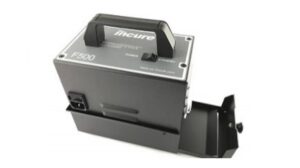
- High-Intensity LED Curing: 0.5 to 5 seconds. LED systems provide concentrated, narrow-spectrum light that is extremely efficient for rapid assembly.
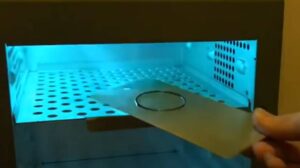
- Mercury Vapor Lamps: 5 to 30 seconds. These lamps provide a broader spectrum and are often used for larger surface areas or applications requiring multiple wavelengths.
- Low-Power Handheld UV Torches: 30 to 90 seconds. These are common for manual repairs or hobbyist applications but lack the consistency required for high-volume manufacturing.
- Shadowed Areas: Infinite. If the UV light cannot “see” the glue (due to opaque substrates or complex geometry), it will never cure unless a secondary curing mechanism (like heat or moisture) is present in the formulation.
How to Optimize Your Production for Faster Curing
In manufacturing, every second saved translates to higher profitability. Here is how you can optimize your UV glue curing time without compromising quality.
Invest in UV-LED Technology
Traditional mercury lamps require a warm-up period and emit a lot of heat, which can damage sensitive plastic substrates. UV-LED systems offer “instant-on/off” capabilities and produce very little infrared heat. Because they emit a specific, high-intensity wavelength, they can often reduce curing times by 50% or more compared to bulb-based systems.
Regular Calibration and Radiometry
UV lamps degrade over time. A bulb that cured glue in 3 seconds when new might take 6 seconds after 1,000 hours of use. Using a radiometer to measure irradiance ensures that your process remains within specification. If you notice the intensity dropping, you can adjust the conveyor speed or exposure time to compensate until the bulb is replaced.
Optimize the Bond Gap
Keep your bond line as thin as possible. Not only does this save money on adhesive costs, but it also ensures the fastest possible UV glue curing time and minimizes shrinkage, which can cause internal stresses in the part.
Consider Dual-Cure Adhesives
If your part has “shadowed” areas where light cannot reach, use a dual-cure adhesive. These products cure primarily with UV light but have a secondary moisture or heat-cure mechanism that ensures the hidden adhesive eventually reaches full strength.
Common Challenges with UV Glue Curing
Even with the best equipment, issues can arise. Understanding these challenges helps in troubleshooting production bottlenecks.
Oxygen Inhibition
In some acrylic-based UV glues, atmospheric oxygen can interfere with the chemical reaction at the surface. This results in a “tacky” or sticky surface even after long exposure times. To solve this, you can increase the UV intensity, use a higher concentration of photoinitiators, or cure the part in a nitrogen-purged environment.
Heat Generation
While UV light itself is cool, the chemical reaction of polymerization is exothermic (it releases heat). Additionally, many UV lamps emit infrared radiation. If the curing time is too long or the intensity too high, the heat can warp thin plastic parts or damage delicate electronics. Balancing speed with thermal management is a key part of process design.
Substrate Fluorescence and Absorption
Some materials absorb UV energy and re-emit it as visible light or heat, effectively stealing the energy meant for the adhesive. Always test your substrates for UV transmission before finalizing your production process.
Testing and Validating Cure Quality
How do you know if your UV glue curing time is sufficient? Relying on a visual check is often not enough. Industrial standards require more rigorous validation.
Hardness Testing
Using a Shore Durometer to measure the surface hardness of the cured adhesive is a common way to verify full cure. If the adhesive is softer than the manufacturer’s specification, it likely needs more exposure time.
The “Cross-Hatch” Adhesion Test
This involve using a blade to cut a grid into the cured adhesive and applying specialized tape to see if any of the adhesive squares lift off. This tests the integrity of the bond to the substrate.
Compression and Shear Testing
For structural bonds, parts are often subjected to mechanical stress until they fail. If the adhesive itself breaks (cohesive failure), it is well-cured. If it peels off the substrate (adhesive failure), there may be a surface preparation issue or an incomplete cure.
Safety Protocols for UV Curing
Working with UV light requires strict safety measures to protect operators. High-intensity UV can cause “welder’s flash” (photokeratitis) in the eyes and severe skin burns in seconds.
- Shielding: All UV curing stations should be fully enclosed or shielded with UV-blocking acrylic or metal curtains.
- PPE: Operators should wear UV-rated safety glasses and long sleeves if there is any risk of stray light exposure.
- Interlocks: Automated systems should have safety interlocks that shut off the UV source if a shield is opened.
The Future of UV Curing
The industry is moving toward even more efficient “smart” curing systems. These systems use sensors to monitor the curing process in real-time, automatically adjusting light intensity or conveyor speed based on the reflected light or the temperature of the part. As adhesive chemistry evolves, we are also seeing the rise of visible light-curing adhesives (curing at 405nm and above), which offer safer working environments and the ability to cure through UV-stabilized plastics.
Optimizing UV glue curing time is a continuous process of refinement. By staying informed about the latest equipment and adhesive formulations, manufacturers can achieve levels of throughput and reliability that were previously impossible.
If you are looking to integrate UV curing into your production line or need expert advice on selecting the right adhesive for your specific application, our technical team is here to help. We provide end-to-end solutions that ensure your bonding processes are fast, reliable, and cost-effective.
[Contact Our Team](https://shop.blazeasia.com/pages/contact)
Conclusion
Understanding and controlling UV glue curing time is essential for any high-precision manufacturing operation. By balancing light intensity, wavelength, and material properties, you can achieve rapid cycle times and superior bond strength. Remember that “fast” should never come at the expense of “complete.” Regular testing and equipment maintenance are the keys to maintaining a stable and productive assembly line.
Whether you are bonding glass to metal or assembling intricate medical devices, mastering the science of light curing will give your business a competitive edge in an increasingly demanding market.
Visit [www.blazeasia.com](https://shop.blazeasia.com) for more information.