The Engineer’s Guide to Validating UV Disinfection Systems
In the modern industrial and municipal landscape, ultraviolet (UV) disinfection has transitioned from a secondary treatment option to a primary safeguard for water, air, and surface sterilization. However, for an engineer, simply installing a UV lamp is not enough. The critical question is not whether the system is “on,” but whether it is performing to the specific germicidal standards required for the application. This is where validation comes into play.
Validating a UV disinfection system is a rigorous process that ensures the equipment delivers the intended dose of UV-C radiation to achieve a target microbial log reduction. Whether you are working in pharmaceutical manufacturing, municipal wastewater treatment, or food and beverage processing, understanding the nuances of validation is essential for compliance, safety, and operational efficiency. This guide explores the technical frameworks, metrics, and methodologies required to validate UV systems effectively.
The Science of UV-C Disinfection: A Brief Refresher
Before diving into validation protocols, it is vital to understand the mechanism we are measuring. UV disinfection primarily relies on the UV-C spectrum (200 to 280 nm), with the peak germicidal effectiveness occurring near 254 nm. At this wavelength, UV light penetrates the cellular membrane of microorganisms and is absorbed by their DNA and RNA.
This absorption causes the formation of pyrimidine dimers, which cross-link the molecular strands. Once the genetic material is damaged, the microorganism can no longer replicate and is rendered “clinically dead” or non-infectious. The success of this process is governed by the UV dose (fluence), which is a product of UV intensity and exposure time.
- Intensity (Irradiance): The amount of UV power per unit area, measured in mW/cm².
- Dose (Fluence): The total energy delivered over time, measured in mJ/cm².
- Equation: Dose (mJ/cm²) = Intensity (mW/cm²) × Time (seconds).
The Validation Framework: IQ, OQ, and PQ
In highly regulated industries, validation follows the classic qualification lifecycle: Installation Qualification (IQ), Operational Qualification (OQ), and Performance Qualification (PQ). This structured approach ensures that every aspect of the UV system—from the physical wiring to its biological efficacy—is verified.
1. Installation Qualification (IQ)
The IQ phase confirms that the system has been delivered and installed according to the manufacturer’s specifications and engineering drawings. Key checklists include:
- Verification of lamp types and part numbers.
- Inspection of quartz sleeves for cracks or fouling.
- Confirmation of sensor placement and orientation.
- Electrical safety checks and ballast compatibility.
- Verification of materials of construction (e.g., 316L stainless steel for pharmaceutical applications).
2. Operational Qualification (OQ)
OQ focuses on the functionality of the system. Does it operate as intended under various conditions? During OQ, engineers test:
- Alarm Logic: Ensuring the system triggers an alert if the UV intensity drops below a set point or if a lamp fails.
- Flow Control: Verifying that the system can handle the maximum rated flow rate without compromising the minimum required dose.
- Power Ramping: If the system uses variable-power ballasts, testing the correlation between power input and UV output.
3. Performance Qualification (PQ)
PQ is the most critical stage, where the system’s ability to disinfect is tested under actual or simulated process conditions. This often involves bioassay testing or the use of chemical actinometers to prove that the system achieves the required log reduction of target pathogens.
Critical Parameters in UV Validation
A robust validation protocol must account for several variables that influence the delivery of UV light. Engineers must monitor and document these parameters to ensure the system remains within its “validated envelope.”
UV Transmittance (UVT)
UVT is a measure of the water or air’s ability to allow UV light to pass through it. It is usually measured over a 1 cm path length. If the fluid is turbid or contains high levels of dissolved organic carbon, the UVT will be low, meaning the UV light cannot reach the pathogens effectively. Validation must define the minimum UVT at which the system can still operate safely.
Flow Rate and Hydraulics
In water treatment, the “contact time” is determined by the hydraulic profile of the UV reactor. Short-circuiting, where water passes through the reactor faster than the average residence time, can lead to under-exposure. Validation involves computational fluid dynamics (CFD) modeling or physical tracer studies to ensure uniform dose distribution.
Lamp Aging and Solarization
UV lamps do not last forever. Over time, the mercury inside the lamp reacts with the quartz envelope (solarization), leading to a gradual decline in intensity. Engineers must validate the system based on the “End of Lamp Life” (EOLL) intensity, typically 70% to 80% of the initial output, to ensure safety throughout the maintenance cycle.
Sleeve Fouling
In many applications, minerals like calcium or iron can precipitate onto the quartz sleeves, forming a scale that blocks UV light. A validated system often includes an automated wiping mechanism. Validation must confirm that the wiping frequency is sufficient to maintain the required intensity.
Bioassay Validation: The Gold Standard
While mathematical models and sensors provide valuable data, the “Gold Standard” for UV validation is the bioassay. Since it is often dangerous to use actual pathogens (like Cryptosporidium or E. coli) in a field test, engineers use surrogate microorganisms.
Common surrogates include:
- MS2 Coliphage: A virus that is highly resistant to UV, often used to validate systems for virus inactivation.
- Bacillus subtilis spores: Used frequently due to their consistent dose-response curve.
- T1 Coliphage: Used when a lower dose sensitivity is required for the test.
The process involves injecting a known concentration of the surrogate into the influent, passing it through the UV system, and measuring the concentration in the effluent. The resulting log reduction is then compared to a lab-certified dose-response curve to determine the “Validated Dose.”
Sensor Technology and Calibration
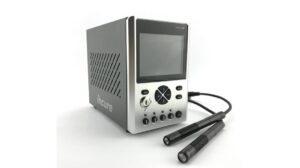
A UV system is only as reliable as its sensors. Validation requires the use of calibrated UV intensity sensors that are traceable to national standards (such as NIST). There are two primary types of sensors used in validation:
Duty Sensors
These are the sensors permanently installed in the UV reactor. They provide real-time feedback to the control system. During validation, the accuracy of these sensors must be checked against a reference sensor.
Reference Sensors
A reference sensor is a highly calibrated instrument used solely for periodic verification of the duty sensors. If the duty sensor deviates by more than 5% to 10% from the reference sensor, it must be recalibrated or replaced. This “sensor uncertainty” is a critical component of the overall validation safety factor.
Regulatory Standards and Guidelines
Engineers do not have to invent validation protocols from scratch. Several international bodies provide comprehensive frameworks:
- US EPA UV Disinfection Guidance Manual (UVDGM): The definitive guide for municipal water applications, detailing bioassay procedures and safety factors.
- NSF/ANSI 55: Standards for residential and small commercial UV systems.
- IUVA (International Ultraviolet Association): Provides protocols for air and surface disinfection validation.
- NWRI (National Water Research Institute): Guidelines specifically tailored for water reuse and wastewater reclamation.
Common Pitfalls in UV System Validation
Even with a well-drafted plan, engineers often encounter challenges that can jeopardize validation. Awareness of these pitfalls is key to a successful project.
1. Improper Sensor Placement
If a sensor is placed too close to a lamp, it may give a false high reading that does not represent the lowest intensity point in the reactor. Validation must confirm that the sensor is placed in the “worst-case” position or that the control logic accounts for the spatial distribution of light.
2. Ignoring Power Quality
Fluctuations in voltage can affect the output of UV ballasts. If the validation was performed at a stable 230V but the site experiences frequent brownouts, the delivered dose may drop below the validated limit. Utilizing power conditioners or validating at the lowest expected voltage is a best practice.
3. Failure to Account for Temperature
The output of low-pressure mercury lamps is highly dependent on the temperature of the lamp wall. In very cold or very hot water, the intensity can drop significantly. Validation should cover the entire range of expected operating temperatures.
4. Over-reliance on “Calculated” Doses
Many cheap UV systems provide a “calculated dose” on their display based on flow and UVT. However, without a physical intensity sensor and a bioassay-verified algorithm, these numbers are often inaccurate. Engineers should prioritize “Measured Dose” systems over purely “Calculated” ones.
Documenting the Validation: The Final Report
The output of the validation process is a comprehensive Validation Report. This document is essential for regulatory audits and for the facility’s risk management profile. A professional validation report should include:
- Detailed description of the test setup and hydraulic conditions.
- Calibration certificates for all instruments used.
- Raw data from bioassay tests (influent/effluent counts).
- The calculated “Reduction Equivalent Dose” (RED).
- The defined “Operating Envelope” (the range of flow, UVT, and power where the system is compliant).
- A signature from a qualified third-party validator or a professional engineer.
The Future of UV Validation: LED Technology
As UV-C LEDs become more prevalent, the validation landscape is shifting. Unlike mercury lamps, LEDs can be cycled on and off instantly and do not contain hazardous materials. However, their output is more directional, and they produce heat differently. Engineers must adapt traditional validation protocols to account for the unique radiation patterns and thermal management requirements of LED-based UV systems.
Conclusion: Ensuring Long-Term Efficacy
Validating a UV disinfection system is not a one-time event; it is a commitment to public health and process integrity. By following a rigorous IQ/OQ/PQ framework, utilizing bioassay testing, and maintaining strict sensor calibration, engineers can ensure that their UV systems provide a reliable barrier against pathogens.
In an era where water scarcity and airborne diseases are increasing concerns, the role of the engineer in validating these systems has never been more critical. A well-validated system does more than just meet a regulation—it provides peace of mind that the technology is performing exactly as intended, protecting lives and products with the power of light.
Visit www.blazeasia.com for more information.