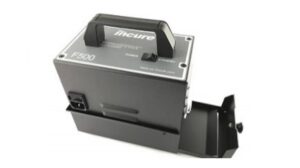
How to Prevent Rework and Scrap with Reliable UV Monitoring
In the modern manufacturing landscape, efficiency and precision are the cornerstones of profitability. For industries relying on ultraviolet (UV) curing processes—ranging from electronics and automotive to medical device assembly and high-speed printing—the margin for error is razor-thin. When a UV curing process fails, the consequences are immediate and costly: rework, scrap, and potential product recalls. This is where the importance of process control comes into play. Understanding how to prevent rework and scrap with reliable UV monitoring is not just a technical necessity; it is a strategic business imperative.
UV curing is a photochemical process in which high-intensity ultraviolet light is used to instantly cure or “dry” inks, coatings, or adhesives. While the process is incredibly fast and environmentally friendly, it is also sensitive to variables that are often invisible to the naked eye. Without a robust monitoring system, manufacturers are essentially “flying blind,” relying on guesswork rather than data. This article explores the critical role of UV monitoring in maintaining quality standards and eliminating the waste associated with curing failures.
The Hidden Costs of Rework and Scrap in UV Curing
Before diving into the technicalities of monitoring, it is essential to understand the financial impact of manufacturing defects. Scrap refers to materials that cannot be fixed and must be discarded, representing a total loss of raw materials, energy, and machine time. Rework, on the other hand, involves fixing a defective product, which doubles or triples the labor cost and disrupts production schedules.
- Material Waste: High-value substrates, expensive UV-curable resins, and specialized inks are lost forever when a part is scrapped.
- Labor Inefficiency: Every hour spent reworking a part is an hour lost on new production.
- Energy Consumption: Running UV ovens and conveyor systems for defective batches wastes significant amounts of electricity.
- Brand Reputation: If under-cured products reach the end consumer, the risk of field failures increases, leading to warranty claims and damage to the brand’s reputation for quality.
By implementing reliable UV monitoring, manufacturers can catch deviations in the curing process before they result in mass production of defective parts.
Why UV Curing Processes Fail
To prevent rework, one must first understand why UV curing fails. Unlike a lightbulb in a home that simply stops working, industrial UV lamps undergo a gradual degradation process. This “silent failure” is the leading cause of scrap in UV-dependent production lines.
1. Lamp Degradation and Aging
Over time, the output of UV lamps (whether mercury vapor or UV LED) decreases. For electrode-based lamps, the internal electrodes wear down, and the quartz envelope can become “solarized” or clouded. This results in a drop in UV intensity even though the lamp still appears to be glowing brightly to the human eye.
2. Reflector Contamination
In many UV systems, reflectors are used to focus the light onto the target. Dust, overspray, and outgassed vapors from the curing process can coat these reflectors. A dirty reflector can reduce the effective UV energy reaching the substrate by as much as 50%, leading to incomplete curing.
3. Power Supply Fluctuations
Variations in the facility’s power grid or aging ballast systems can cause fluctuations in the lamp’s output. Without real-time monitoring, these dips in power go unnoticed until a quality check reveals tacky or uncured surfaces.
4. Conveyor Speed Inconsistencies
The “dose” or energy density of UV light is a function of intensity and time. If the conveyor speed increases due to a mechanical error or operator adjustment, the product spends less time under the lamp, receiving an insufficient dose of UV energy.
The Core Metrics: Irradiance and Energy Density
To effectively monitor a UV process, two primary measurements must be tracked: Irradiance and Energy Density (Dose). Reliable UV monitoring equipment allows technicians to quantify these metrics accurately.
Irradiance (Intensity)
Irradiance is the “brightness” of the UV light at a specific point, measured in mW/cm². High peak irradiance is necessary for the UV light to penetrate through thick coatings or highly pigmented inks. If the irradiance is too low, the surface might look cured, but the bottom layer remains liquid, leading to adhesion failure.
Energy Density (Dose)
Energy density is the total amount of UV energy delivered to the surface over time, measured in mJ/cm². It is the mathematical integral of irradiance over the exposure time. Think of it like a tan: irradiance is how strong the sun is, and dose is how long you stay out in it. Both are required for a successful cure.
By monitoring both mW/cm² and mJ/cm², manufacturers can pinpoint exactly why a process is failing. If the dose is low but the intensity is high, the conveyor is moving too fast. If both are low, the lamp or reflector likely needs maintenance.
How Reliable UV Monitoring Prevents Rework
The transition from reactive maintenance (fixing things when they break) to proactive process control is made possible through reliable UV monitoring. Here is how it directly prevents rework and scrap:
Establishing a Process Window
Every UV-curable material has a “process window”—a range of UV intensity and dose within which the material will cure perfectly. By using a radiometer to define this window during the R&D phase, manufacturers can set clear “Pass/Fail” limits for production. If the monitoring data shows the process is drifting toward the edge of the window, adjustments can be made before any scrap is produced.
Real-Time Alerts
Advanced UV monitoring systems utilize online sensors that provide continuous feedback. If a lamp fails or a power supply drops, the system can trigger an immediate alarm or even shut down the conveyor. This prevents the “hidden scrap” scenario where thousands of parts are processed incorrectly before an operator notices the issue at the end of the shift.
Predictive Maintenance
By tracking UV output trends over time, maintenance teams can predict exactly when a lamp will reach the end of its useful life. Instead of replacing lamps on a fixed schedule (which is often wasteful) or waiting for them to fail (which causes scrap), they can be replaced during planned downtime when the output hits a pre-defined minimum threshold.
Types of UV Monitoring Tools
Choosing the right tool is essential for obtaining reliable data. Depending on the application, manufacturers typically use one of three types of monitoring equipment:
- UV Radiometers (Power Pucks): These are self-contained instruments that pass through the UV oven on the conveyor belt. They provide a comprehensive profile of the UV environment, measuring peak irradiance and total dose across multiple UV bands (UVA, UVB, UVC, and UVV).
- Online UV Sensors: These are fixed sensors mounted inside the UV chamber. They provide continuous, real-time data to a display or a PLC (Programmable Logic Controller). They are ideal for high-volume production where manual testing is too infrequent.
- Spot Radiometers: These are used for point-of-cure applications, such as medical device bonding with UV wands. They ensure that the light guide is delivering the correct intensity to the specific bond site.
Implementing a UV Monitoring Protocol
Simply owning a radiometer is not enough; it must be part of a disciplined quality control protocol. To effectively prevent rework and scrap, follow these steps:
Step 1: Baseline Your System
When your UV system is new and the lamps are fresh, take a baseline measurement. This represents your “Gold Standard.” All future measurements will be compared against this data to identify degradation.
Step 2: Define Measurement Frequency
How often should you check your UV output? For critical applications, such as medical or aerospace, checking at the start of every shift is recommended. For less critical applications, a daily or weekly check may suffice. The goal is to catch deviations before they exceed the process window.
Step 3: Log and Analyze Data
Keep a digital or physical log of UV measurements. Trends in the data can reveal underlying issues. For example, a sudden drop in intensity might indicate a cooling fan failure, while a gradual decline indicates lamp aging.
Step 4: Calibrate Regularly
UV monitoring equipment is a precision instrument. To ensure the data is reliable, radiometers and sensors must be calibrated annually by an accredited laboratory. Using an uncalibrated radiometer to prevent scrap is like using a broken ruler to build a house.
Industry Applications and Success Stories
Electronics Manufacturing
In PCB assembly, conformal coatings are used to protect sensitive components from moisture and dust. If the UV cure is incomplete, the coating can remain tacky, attracting contaminants and causing electrical shorts. Reliable UV monitoring ensures that every board receives the exact dose required for a hard, protective finish, eliminating the need for chemical stripping and rework.
Automotive Coatings
Automotive manufacturers use UV-curable clear coats for headlamps and interior trim. These coatings must be incredibly durable. Under-curing leads to premature yellowing or peeling in the field. By using online UV sensors, automotive plants can guarantee 100% inspection of the curing process, ensuring that every vehicle meets long-term durability standards.
Medical Device Bonding
The assembly of catheters, syringes, and hearing aids often involves UV-cured adhesives. In this industry, scrap is not just a financial loss; it is a regulatory risk. UV monitoring provides the “traceability” required by the FDA and other regulatory bodies, proving that each device was manufactured under controlled conditions.
The ROI of UV Monitoring
Many manufacturers hesitate at the initial cost of high-quality UV monitoring equipment. However, the Return on Investment (ROI) is often realized in a matter of months. Consider the following calculation:
If a production line produces $10,000 worth of product per day and has a 2% scrap rate due to curing issues, the annual loss is approximately $50,000 (assuming 250 workdays). A comprehensive UV monitoring system might cost $5,000 to $10,000. By reducing that scrap rate to near zero, the equipment pays for itself several times over in the first year alone.
Furthermore, the reduction in energy costs (by not running lamps at 100% power when 80% is sufficient) and the optimization of lamp replacement cycles add to the bottom-line savings.
Conclusion: Moving Toward Zero-Defect Manufacturing
The goal of any modern manufacturing facility is to achieve “zero-defect” production. In processes involving ultraviolet light, this goal is unattainable without reliable UV monitoring. By quantifying the invisible variables of irradiance and energy density, manufacturers can transform a volatile process into a stable, predictable, and highly profitable operation.
Preventing rework and scrap is about more than just saving money; it is about operational excellence. When you have confidence in your UV curing process, you can increase line speeds, reduce safety margins, and focus on innovation rather than fire-fighting quality issues. Reliable UV monitoring is the bridge between “hoping for the best” and “knowing the results.”
As UV technology continues to evolve—particularly with the rapid adoption of UV LED curing—the need for sophisticated monitoring tools will only grow. LEDs have different spectral outputs and degradation patterns than traditional lamps, making accurate, calibrated measurement even more critical. By investing in the right monitoring strategy today, you are future-proofing your production line and ensuring that every product that leaves your facility is cured to perfection.
Visit www.blazeasia.com for more information.