Dispensing Systems

  • Post last modified:January 16, 2026

The Ultimate Guide to Dispensing Systems: Precision and Efficiency in Modern Manufacturing

In the rapidly evolving landscape of modern manufacturing, precision is no longer just a goal—it is a requirement. Whether you are assembling the latest smartphone, manufacturing life-saving medical devices, or building high-performance automotive components, the ability to apply fluids with absolute accuracy is paramount. This is where dispensing systems come into play. These systems have transformed from simple hand-held tools into sophisticated, automated solutions that drive productivity and ensure product quality across dozens of industries.

Understanding the nuances of dispensing systems—from the types of technology available to the specific applications they serve—is essential for any production manager or engineer looking to optimize their workflow. In this comprehensive guide, we will explore everything you need to know about fluid dispensing, its benefits, and how to choose the right system for your specific needs.

What Are Dispensing Systems?

At its core, a dispensing system is a specialized piece of equipment designed to control the application of fluids onto a substrate. These fluids can range from low-viscosity liquids like water and solvents to high-viscosity pastes such as silicones, epoxies, and greases. The primary objective of any dispensing system is to deliver a precise amount of material at a specific location, consistently, and without waste.

In an industrial context, dispensing systems replace manual application methods that are prone to human error, inconsistency, and material wastage. By automating the process, manufacturers can achieve tighter tolerances, faster cycle times, and a significant reduction in production costs.

Types of Dispensing Systems

Dispensing systems are categorized based on their level of automation and the technology used to move the fluid. Choosing the right type depends on your production volume, the complexity of the part, and the physical properties of the fluid being used.

1. Manual Dispensing Systems

Manual systems are the most basic form of dispensing. They typically consist of a handheld syringe or applicator controlled by the operator. These are ideal for low-volume production, laboratory work, or repair tasks where high precision is less critical than flexibility. While cost-effective, they are limited by operator fatigue and the inherent variability of human movement.

2. Semi-Automated Dispensing Systems

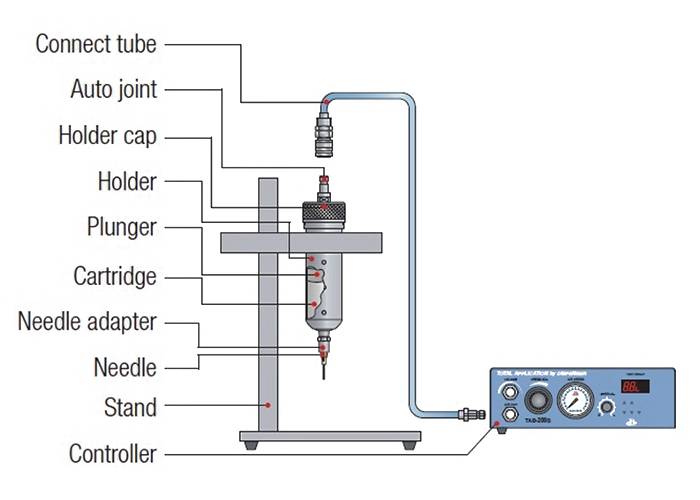
Semi-automated systems bridge the gap between manual and fully automated solutions. These often feature a benchtop controller that regulates the air pressure and timing of the dispense cycle. The operator still positions the part or the applicator, but the system ensures that the exact same volume of fluid is released every time the trigger is pulled. This significantly improves repeatability compared to purely manual methods.

3. Fully Automated Robotic Dispensing Systems

For high-volume manufacturing, fully automated dispensing systems are the gold standard. These systems utilize multi-axis robots (often 3-axis or 4-axis) to move a dispensing valve over a stationary or moving workpiece. Integrated with sophisticated software, these robots can follow complex paths, dispense at high speeds, and integrate seamlessly into a larger assembly line. They are essential for applications requiring extreme precision, such as micro-electronics assembly.

Key Dispensing Technologies

The “heart” of any dispensing system is the mechanism used to move the fluid. Different fluids and applications require different technologies to ensure accuracy.

Time-Pressure Dispensing

This is the most common and cost-effective technology. It works by applying a controlled pulse of air to a syringe or tank for a specific amount of time. While simple, its accuracy can be affected by changes in fluid viscosity (due to temperature) or changes in the fluid level within the syringe.

Volumetric Dispensing

Volumetric systems are designed to dispense a specific volume of fluid regardless of changes in pressure or viscosity. Common types include:

  • Piston Pumps: Use a mechanical piston to displace a known volume of fluid.
  • Auger Valves: Use a rotating screw to move fluid, ideal for high-viscosity pastes containing fillers.
  • Peristaltic Pumps: Use rollers to squeeze a tube, perfect for volatile or reactive fluids as the fluid never touches the pump’s internal parts.

Jetting Technology

Jetting is a non-contact dispensing method. Instead of a needle touching the surface, the system “shoots” droplets of fluid at high speeds. This allows for incredibly fast dispensing and the ability to reach into tight spaces or onto uneven surfaces where a traditional needle might crash.

Essential Components of a Dispensing System

A complete dispensing setup is an ecosystem of several components working in harmony. To get the best results, each part must be compatible with the fluid and the application.

  • The Controller: The brain of the system that manages timing, pressure, and vacuum (to prevent dripping).
  • The Valve: The mechanism that opens and closes to allow fluid flow. Types include needle valves, diaphragm valves, and spool valves.
  • The Reservoir: Where the fluid is stored. This can be a small syringe for expensive adhesives or a large pressure tank for bulk materials.
  • The Dispensing Tip: The final point of contact. Tips come in various gauges, lengths, and materials (like stainless steel or PTFE-lined) to suit different fluids.
  • The Motion System: In automated setups, this includes the gantry or robotic arm that moves the valve along the X, Y, and Z axes.

Industrial Applications of Dispensing Systems

The versatility of dispensing systems makes them indispensable across a wide range of sectors. Here are some of the most common applications:

Electronics and Semiconductors

In the electronics industry, dispensing systems are used for “underfill” to protect chips, “conformal coating” to shield circuit boards from moisture, and applying solder paste. As devices get smaller, the demand for micro-dispensing—applying dots smaller than a human hair—has skyrocketed.

Medical Device Manufacturing

Medical applications require the highest levels of cleanliness and precision. Dispensing systems are used to bond catheters, seal diagnostic kits, and lubricate surgical instruments. These systems must often comply with strict regulatory standards and provide full traceability of the materials used.

Automotive Industry

From applying structural adhesives in car frames to dispensing gasketing materials in engines, the automotive sector relies on heavy-duty dispensing systems. These systems must be robust enough to handle high volumes and abrasive materials while maintaining consistent performance.

Aerospace and Defense

Aerospace components are subjected to extreme conditions. Dispensing systems are used to apply specialized sealants, potting compounds for electronics, and specialized lubricants that can withstand high altitudes and temperature fluctuations.

The Benefits of Advanced Dispensing Systems

Investing in a high-quality dispensing system offers a rapid return on investment (ROI) through several key advantages:

1. Improved Precision and Consistency

Automated systems eliminate the “human element.” Every dot, line, or bead of fluid is identical to the last, ensuring that every product meets the same quality standards. This is critical for maintaining brand reputation and reducing the rate of defective products.

2. Significant Material Savings

Manual dispensing often leads to over-application. By controlling the exact volume dispensed down to the microliter, companies can reduce fluid consumption by 30% or more. Given the high cost of industrial adhesives and resins, these savings add up quickly.

3. Increased Throughput

Automated dispensing robots can move and dispense much faster than a human operator. They don’t need breaks and can operate 24/7, significantly increasing the number of units produced per shift.

4. Enhanced Safety and Ergonomics

Many industrial fluids emit fumes or are hazardous to touch. Automated systems keep operators away from these substances. Furthermore, they eliminate the repetitive strain injuries associated with manual syringe squeezing.

How to Choose the Right Dispensing System

Selecting the right equipment requires a deep dive into your specific process. Consider the following factors before making a purchase:

Fluid Properties

What is the viscosity of the fluid? Is it chemically aggressive? Does it contain abrasive fillers? For example, a diaphragm valve is excellent for cyanoacrylates (super glues), while an auger valve is better for thick thermal pastes.

Application Requirements

Are you dispensing dots, lines, or filling a cavity (potting)? Do you need non-contact jetting because the surface is fragile? The geometry of your part will dictate the type of valve and motion system required.

Volume and Speed

If you are producing ten units a day, a benchtop semi-automated system is likely sufficient. If you are producing ten thousand, you will need a fully integrated robotic cell.

Integration and Software

Does the dispensing system need to communicate with other machines on the factory floor? Look for systems with robust software that supports PLC integration and easy programming.

If you are unsure which technology fits your production line, it is always best to consult with experts. [Contact Our Team](https://shop.blazeasia.com/pages/contact) for a personalized consultation on your dispensing needs.

Maintenance and Calibration

To keep a dispensing system running at peak performance, regular maintenance is vital. Fluids can cure inside valves if left idle, and mechanical parts can wear over time. A proactive maintenance schedule should include:

  • Daily Cleaning: Ensuring tips are clear and valves are purged of old material.
  • Calibration: Periodically checking the output weight or volume to ensure the system hasn’t drifted.
  • Seal Replacement: Replacing O-rings and seals in valves to prevent leaks and pressure drops.

The Future of Dispensing: Industry 4.0

The world of dispensing is moving toward “Smart Dispensing.” Modern systems are now being equipped with sensors that provide real-time data on fluid flow, pressure, and temperature. This data is fed into AI algorithms that can predict when a valve might fail or automatically adjust settings to compensate for environmental changes. This level of connectivity is a cornerstone of the Industry 4.0 revolution, leading to “lights-out” manufacturing where systems self-correct with minimal human intervention.

Conclusion

Dispensing systems are much more than just tools for applying glue; they are precision instruments that sit at the heart of modern industrial efficiency. By understanding the different types of systems, the technologies that drive them, and the specific needs of your application, you can transform your manufacturing process. Whether you are looking to save on material costs, increase your production speed, or achieve a level of precision that manual labor simply cannot match, the right dispensing solution is out there.

As technology continues to advance, we can expect dispensing systems to become even more accurate, faster, and more integrated into the digital factory. Staying ahead of these trends is key to remaining competitive in today’s global market.

Visit [www.blazeasia.com](https://shop.blazeasia.com) for more information.