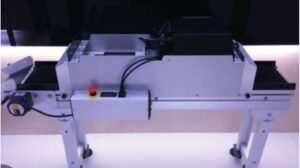
Precision Fluid Dispenser: The Ultimate Guide to Modern Manufacturing Excellence
In the world of high-tech manufacturing, the difference between a high-quality product and a failed unit often comes down to a fraction of a microliter. Whether it is the application of conductive adhesive on a smartphone motherboard or the precise dosing of a life-saving reagent in a medical diagnostic kit, the precision fluid dispenser is the unsung hero of the production line. As industries move toward miniaturization and higher throughput, understanding the nuances of fluid dispensing technology has never been more critical.
This comprehensive guide explores everything you need to know about precision fluid dispensers—from the underlying technologies and industry applications to selection criteria and maintenance best practices. If you are looking to optimize your production line for better yield and lower waste, you are in the right place.
What is a Precision Fluid Dispenser?
A precision fluid dispenser is an automated or semi-automated system designed to apply controlled amounts of fluids—such as adhesives, lubricants, sealants, solder pastes, and reagents—onto a substrate. Unlike manual application methods, these systems ensure that every deposit is identical in volume, shape, and placement.
A standard precision dispensing system typically consists of three primary components:
- The Controller: The “brain” of the system that regulates air pressure, timing, and motor movements.
- The Fluid Reservoir: Usually a syringe barrel, cartridge, or tank that holds the material.
- The Dispensing Valve or Tool: The mechanism that actually releases the fluid, which can range from simple needles to complex piezoelectric jetting valves.
The Evolution of Dispensing Technology
The journey from manual “squeeze bottles” to high-speed robotic jetting has been driven by the need for consistency. In the early days of electronics, manual dispensing was sufficient. However, as components shrank to the size of a grain of sand, human error became a significant bottleneck. Today’s precision fluid dispensers utilize advanced sensors, vision systems, and motion control to achieve micron-level accuracy at speeds that exceed human capability.
Core Technologies in Precision Fluid Dispensing
Not all fluids behave the same way. A material’s viscosity, chemical composition, and curing method dictate which dispensing technology is most effective. Here are the most common types used in industrial settings:
1. Time-Pressure Dispensing
This is the most common and cost-effective method. It works by applying a controlled pulse of air to a syringe barrel for a specific duration. While simple, it can be sensitive to changes in fluid viscosity and “tailing” (where the fluid strings out). It is best suited for non-critical applications or materials with very stable viscosities.
2. Auger Valve Dispensing
Auger valves use a rotating screw (auger) to move fluid down a chamber and out through a nozzle. This is a form of positive displacement dispensing, meaning it is highly accurate regardless of fluid pressure changes. It is the gold standard for dispensing solder pastes and silver epoxies in the SMT (Surface Mount Technology) industry.
3. Jetting Valves (Non-Contact Dispensing)
Jetting is a revolutionary technology where the fluid is “shot” onto the substrate from a distance, rather than being “dapped” on with a needle. This eliminates Z-axis movement, significantly increasing speed. Piezoelectric jetting valves can cycle hundreds of times per second, making them ideal for high-volume electronics manufacturing and underfill processes.
4. Peristaltic Pumps
Often used in medical and laboratory environments, peristaltic dispensers move fluid by compressing a flexible tube. Because the fluid only touches the inside of the tube, this method is perfect for volatile chemicals or biological fluids that must remain sterile and uncontaminated.
5. Piston Displacement
Piston dispensers work like a medical syringe but are driven by a high-precision motor. They are excellent for two-part materials (like 2K epoxies) where a specific mixing ratio must be maintained with absolute precision.
Key Industries Utilizing Precision Fluid Dispensers
The versatility of fluid dispensing systems makes them essential across a wide spectrum of sectors:
Electronics and Semiconductors
In electronics, precision is non-negotiable. Dispensers are used for:
- Underfill: Protecting delicate flip-chip connections from mechanical stress.
- Conformal Coating: Applying a thin protective film over PCBs to prevent corrosion.
- Solder Paste: Precision application for component bonding.
Medical Device Manufacturing
From coating stents with medicine to assembling catheters, the medical industry requires validated, repeatable processes. Precision fluid dispensers ensure that dosages are exact, which is often a regulatory requirement for patient safety.
Automotive Industry
Modern vehicles are packed with sensors and electronic control units (ECUs). Automated dispensing is used for gasketing, potting sensors to protect them from engine heat, and lubricating moving parts within the transmission or braking systems.
Aerospace and Defense
In aerospace, materials must withstand extreme temperatures and pressures. Precision dispensers are used to apply specialized sealants and structural adhesives that ensure the integrity of aircraft components.
The Benefits of Precision Fluid Dispensing
Investing in a high-quality precision fluid dispenser offers a rapid return on investment (ROI) through several key channels:
1. Drastic Reduction in Material Waste
Many industrial fluids, such as silver-filled epoxies or specialty medical reagents, are incredibly expensive. Manual dispensing often leads to over-application. Precision systems apply the exact amount needed, potentially saving thousands of dollars in material costs annually.
2. Improved Product Quality and Consistency
Human operators get tired; machines do not. A precision dispenser will deliver the 1,000th deposit with the same accuracy as the first. This consistency reduces the rate of “rework” and scrap, leading to higher overall yield.
3. Increased Throughput
Automated systems can operate at speeds impossible for manual labor. Especially with jetting technology, manufacturers can significantly increase their units-per-hour (UPH) without sacrificing quality.
4. Enhanced Safety
Many industrial adhesives and solvents emit fumes or are skin irritants. Using an enclosed, automated dispensing system minimizes worker exposure to hazardous chemicals.
Critical Factors to Consider When Choosing a Dispenser
Selecting the right precision fluid dispenser requires a deep dive into your specific application. Before making a purchase, evaluate the following factors:
Fluid Viscosity
Is your fluid watery (low viscosity) or like peanut butter (high viscosity)? Time-pressure systems struggle with high viscosity, while auger valves thrive with them. Understanding the centipoise (cP) rating of your material is the first step.
Deposit Size and Tolerance
Determine the minimum and maximum volume you need to dispense. If you need to deposit dots smaller than 0.5mm, you will likely need a high-end jetting valve or a precision micro-dispensing system.
Material Chemistry
Some fluids are abrasive (containing glass beads or metal fillers), while others are chemically aggressive. You must ensure the “wetted parts” of the dispenser (the parts that touch the fluid) are compatible with the material to prevent corrosion or premature wear.
Production Volume
For low-volume prototyping, a benchtop semi-automated dispenser may suffice. For 24/7 mass production, you will need a fully integrated robotic dispensing platform with vision guidance and height sensing.
If you are unsure which system fits your needs, Contact Our Team for a professional consultation and application testing.
Advanced Features: Taking Precision to the Next Level
Modern precision fluid dispensers often come equipped with “smart” features that further enhance performance:
- Vision Systems: Cameras that “see” the substrate and adjust the dispensing path in real-time to account for slight misalignments of the part.
- Laser Height Sensing: Measures the topography of the substrate to maintain a constant “gap” between the needle and the surface, ensuring uniform line widths.
- Weight Scales: Integrated scales that periodically weigh a deposit to calibrate the system automatically, compensating for changes in fluid temperature or batch-to-batch variation.
- Heated Nozzles: Heating the fluid can lower its viscosity, making it easier to dispense and improving flow characteristics.
Maintenance and Troubleshooting
To keep a precision fluid dispenser operating at peak performance, a regular maintenance schedule is essential. Most issues in dispensing arise from “cured” material inside the valve or air bubbles in the fluid line.
Daily Cleaning
At the end of a shift, any fluid remaining in the nozzle or valve head should be cleaned according to the manufacturer’s instructions. This prevents the material from hardening and clogging the system.
Calibration
Regularly check the output volume of your dispenser. Over time, mechanical parts can wear, or air pressure regulators can drift. A weekly calibration check ensures your process remains within tolerance.
Dealing with Air Bubbles
Air is the enemy of precision. Even a tiny micro-bubble can compress, causing “oozing” or missed deposits. Using a centrifugal mixer to degas your fluid before loading it into the dispenser is a best practice for high-precision applications.
The Future of Precision Fluid Dispensing
As we look toward the future, the integration of Artificial Intelligence (AI) and the Internet of Things (IoT) is set to transform the industry. Imagine a precision fluid dispenser that can predict when a nozzle is about to clog based on pressure sensor data and alert maintenance before a failure occurs. Furthermore, as the demand for flexible electronics and wearable technology grows, we will see even more advancement in “additive dispensing,” where dispensers are used to 3D print functional circuits directly onto curved surfaces.
Conclusion
A precision fluid dispenser is more than just a tool; it is a critical investment in the quality and scalability of your manufacturing process. By selecting the right technology—whether it’s an auger valve for solder paste or a jetting valve for underfill—you can reduce waste, increase speed, and ensure that your products meet the highest standards of excellence.
In an era where “good enough” is no longer an option, mastering the art and science of fluid dispensing is a competitive necessity. By understanding the interaction between fluid dynamics, mechanical hardware, and software control, manufacturers can unlock new levels of efficiency and innovation.
Ready to upgrade your dispensing process? Explore the latest in high-performance dispensing technology and find the perfect solution for your specific application requirements.
Visit www.blazeasia.com for more information.